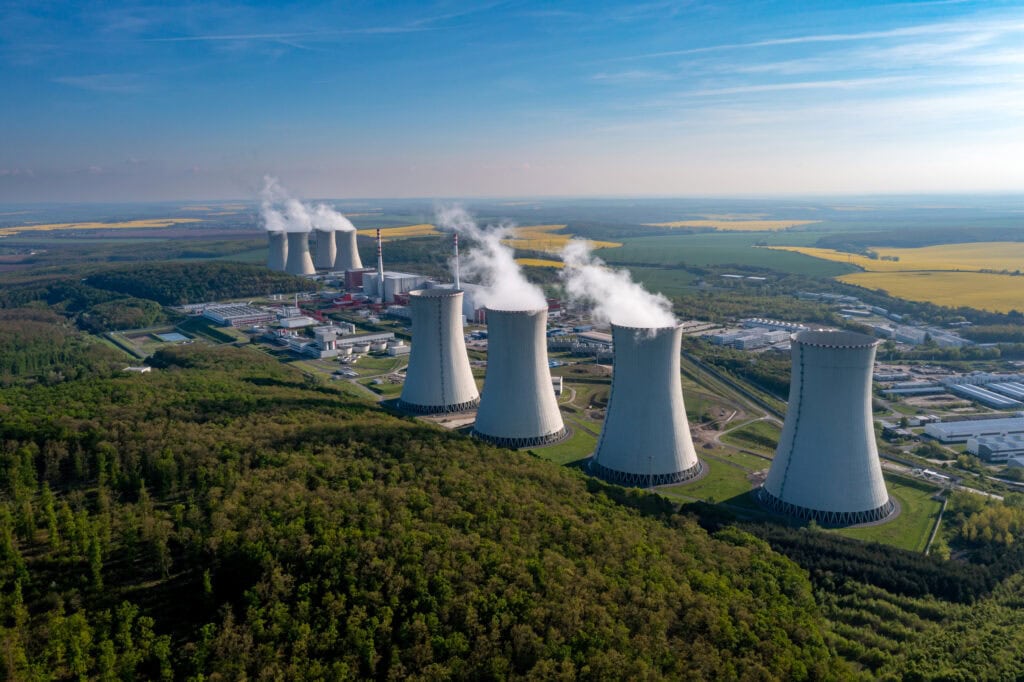
When people across Slovakia switch on the lights, cook dinner or charge their phones tonight, some of that electricity may already come from Unit 4 of the Mochovce Nuclear Power Plant. At 20:41 on Thursday, 15 October 2026, Slovenské elektrárne successfully connected the new reactor unit to the national transmission system for the first time.
During the process known as grid synchronization, the first of the unit’s two turbine generators was synchronized with the grid and began delivering its first megawatt-hours of electricity.
“For the first time in its history, Mochovce Unit 4 is supplying electricity to Slovakia’s power system. This is a moment generations of people who prepared, built and commissioned this project have been waiting for. Today, we are seeing the result of their work in the form of a new low-carbon source of electricity for Slovakia.”
Branislav Strýček, Chairman and Chief Executive Officer of Slovenské elektrárne.
The synchronization took place while the reactor was operating at 20% power. The first of the unit’s two turbine generators was connected to the grid. Unit 4 has a total installed electrical capacity of 471 MW and, once fully operational, is expected to generate around 3.5 million MWh of electricity annually, enough to cover approximately 13% of Slovakia’s current electricity consumption.
Grid synchronization itself takes only a few moments, but it is preceded by an extensive series of inspections and tests. Specialists must verify generator protection systems, electrical circuits and the readiness of all equipment involved in exporting power to the grid. The electricity produced by the generator must precisely match the voltage, frequency and phase of the transmission system.
The process can be compared to a musician joining an orchestra. Before playing, the musician must tune the instrument, match the tempo and enter at exactly the right moment. Only then can they perform in harmony with the rest of the ensemble. For Mochovce Unit 4, that decisive moment was the connection of the generator to the national grid.
The journey of electricity begins inside the reactor. Heat generated by the controlled nuclear fission process is used in steam generators to produce steam. The steam drives a turbine, the turbine powers a generator, and the generator converts mechanical energy into electricity. Before synchronization could take place, every element of this chain had to be ready to operate together safely and reliably.
“From the main control room, operators manage reactor power and oversee the operation of the steam generators, turbine and generators. Electrical specialists then establish a safe connection to the grid. Today’s milestone lasted only a short time, but it was made possible by the perfectly coordinated work of many different professions,” said Martin Mráz, Project Director for Mochovce Units 3 and 4.
The first synchronization does not mark the end of the commissioning process. The second turbine generator will also be synchronized to the grid, followed by a series of mandatory tests at progressively higher power levels. During these tests, specialists will verify the performance of technological, control and safety systems all the way to nominal power output. The process is being carried out under the supervision of the Nuclear Regulatory Authority of the Slovak Republic.
Mochovce Unit 4 achieved first sustained criticality on 6 August 2026. This was followed by physical tests and power ascension testing, which prepared the unit for electricity generation and grid connection. Grid synchronization represents a major turning point: for the first time, electricity generated by Unit 4 has left the plant and entered the national power system.
After years of development and construction, the project has begun delivering the result for which it was built: reliable electricity for Slovakia.
With a 66% share of Slovakia’s total electricity generation, Slovenské elektrárne is the country’s largest electricity producer. Following the shutdown of Slovakia’s last coal-fired power plant in the first quarter of 2024, the company now generates all of its electricity without direct CO₂ emissions.
Slovenské elektrárne operates five nuclear units, 31 hydroelectric power plants and two photovoltaic power plants. The flexibility of the Slovak power system is also supported by two battery energy storage facilities: a 3.2 MW battery system at Dobšiná and a 36 MW battery storage facility in Nováky, the largest battery installation in Slovakia.
The company’s commitment to low-carbon electricity generation has made it a leader in sustainable energy production in Central and Eastern Europe. Slovenské elektrárne has been included five times in the prestigious Europe’s Climate Leaders ranking, compiled annually by the Financial Times and Statista since 2021.
Power start-up is the final major phase before the unit is put into operation. Over the coming months, specialists from Slovenské elektrárne will gradually increase reactor power and verify the performance of the plant’s technological and safety systems under conditions approaching normal operation.
The start of power start-up was preceded by approval from the Nuclear Regulatory Authority of the Slovak Republic, which confirmed the unit’s readiness for the next phase of commissioning after evaluating the results of physical start-up, carrying out inspections and reviewing the relevant documentation.
The start of power start-up is one of the final major milestones before Unit 4 is put into operation. We are entering a phase in which the readiness of the plant’s technology will be verified directly as reactor power increases. Following the successful completion of this phase, Slovakia will gain a new, stable source of electricity that will contribute to the country’s energy security and the achievement of its climate targets for decades to come.
Branislav Strýček, Chairman of the Board and Chief Executive Officer of Slovenské elektrárne
During power start-up, reactor power will be gradually increased to its nominal level. At each power level, the prescribed operational tests and measurements will be carried out to verify the correct operation of the technological systems and safety features, as well as the behaviour of the reactor under various operating conditions.
“We have successfully completed the fuel loading and physical start-up phases. Ahead of us is a series of operational tests during which we will gradually increase the unit’s power and confirm the readiness of individual components for long-term operation. The achievement of this milestone demonstrates the high level of expertise of the Slovenské elektrárne project team and the quality of the work carried out by everyone involved in the completion of the plant,” said Martin Mráz, Project Director for the Completion of Mochovce Nuclear Power Plant.
Once commissioned, Mochovce Unit 4 will increase the generating capacity of Slovakia’s largest electricity producer and contribute to a further increase in the share of low-carbon nuclear energy in the Slovak energy mix. The unit is equipped with a VVER-440/V213 reactor and has an installed electrical capacity of 471 MW.
Power start-up is the final major phase before the commercial operation of a nuclear unit. Following the successful completion of physical start-up, reactor power is gradually increased and the power plant begins generating electricity for the Slovak electricity system for the first time. At each power level, dozens of tests, measurements and inspections are carried out to examine the behaviour of the reactor, turbine, generator and safety systems under actual operating conditions. After evaluating the results, the Nuclear Regulatory Authority of the Slovak Republic may authorise progression to the next power level.
During power start-up, reactor power will be gradually increased. At each power level, tests and measurements will be carried out to verify the operation of the technological and safety systems.
5% – Verification of the unit’s basic operating parameters.
20% – When reactor power is increased to 20%, sufficient steam will be produced in the steam generators to synchronise the turbine generators with the Slovak electricity system, allowing the first megawatt-hours of electricity to flow into the grid.
35%, 55%, 75%, 90% – Verification of the unit’s operating characteristics as power is gradually increased, including dynamic tests to verify the functionality of individual technological systems and their interaction under various operating conditions.
100% – The unit’s nominal power level and final tests before commercial operation. The successful completion of a 144-hour test run at 100% nominal power will confirm the full functionality of the new unit and the achievement of its design parameters.
About the company
With a 66% share of Slovakia’s total electricity generation, Slovenské elektrárne, a.s., is the country’s largest electricity producer. Following the closure of its last coal-fired power plant at the end of the first quarter of 2024, the company now generates all its electricity without direct CO₂ emissions. It operates five nuclear units, 31 hydroelectric power plants and two photovoltaic power plants.
The company’s commitment to generating electricity from low-carbon sources makes it a leader in sustainable energy generation in Central and Eastern Europe. The company has been included five times in the prestigious Europe’s Climate Leaders ranking, compiled by the Financial Times and Statista since 2021.
Who are the shareholders?
Slovenské elektrárne, a.s., has two shareholders. The majority shareholder, with a 66% stake, is Slovak Power Holding B.V. (SPH), which is owned by the Czech energy group Energetický a průmyslový holding (EPH). The second shareholder is the Slovak Republic, which holds a 34% stake in Slovenské elektrárne.
On Thursday, 6 August 2026, at 22:10, the reactor of Mochovce Unit 4 reached criticality, followed by the achievement of minimum controlled power at 22:31. This represents one of the key milestones in the commissioning process of a nuclear generating unit, confirming the reactor's readiness for the subsequent stages of testing.
“The achievement of criticality and minimum controlled power is the result of the work of thousands of specialists who have contributed to the preparation, construction, inspection and start-up of Unit 4. It confirms that the plant is ready to proceed to the next phase of testing before the commencement of electricity generation,” said Martin Mráz, Mochovce Project Director.
This milestone will be followed by reactor physics tests and testing at various power levels. The objective is to verify the performance of all plant systems under operating conditions and to prepare the unit for synchronisation with the electricity grid.
Mochovce Unit 4 is the second of the two new nuclear units constructed at the power plant site. Once both units are in operation, Slovakia will rank among the countries with the highest share of electricity generated from nuclear energy in the world. The new unit will also strengthen domestic electricity production and contribute to the country's long-term energy security.
The achievement of criticality represents a major success for the project and confirms that Unit 4 continues to progress in accordance with the technological start-up schedule towards the generation of its first megawatt-hours of electricity.
Just a few days after the loading of the last of the 349 fuel assemblies, Mochovce Unit 4 reached another major milestone: reactor assembly. During this operation, specialists progressively installed and connected dozens of tonnes of technological equipment, closed the reactor vessel, and carried out a series of inspections and tests confirming the readiness of the primary circuit for the subsequent stages of start-up. The new nuclear unit is now moving into the phase of physical tests leading to the first controlled fission reaction.
“Mochovce has once again moved closer to its goal. Over the past few days, we have successfully completed two key operations: nuclear fuel loading and reactor assembly. We are now entering the start-up phase, which will determine the commissioning of the new unit. Each of these milestones brings us closer to the moment when Slovakia will fully utilise the potential of the completed Mochovce project and the new unit will begin generating electricity for households and businesses for decades to come.”
Branislav Strýček, Chairman of the Board and Chief Executive Officer, Slovenské elektrárne
The reactor is securely enclosed within the hermetic zone inside the containment structure, which consists of the reinforced concrete protective envelope of the nuclear island. Following the closure and sealing of the reactor vessel, we completed a series of inspections and tests that confirmed the readiness of the primary circuit for the next phases of start-up.
“With the completion of reactor assembly, we have concluded one of the key stages of physical start-up. Ahead of us are pressure and leak-tightness tests, pre-critical tests and, subsequently, first criticality, that is, the first controlled self-sustaining fission chain reaction. All activities are being carried out in accordance with the approved programme and with a strong emphasis on nuclear safety, which remains our absolute priority,” said Martin Mráz, Project Director of MO34.
Provided the start-up programme continues according to schedule, Unit 4 is expected to deliver its first megawatt-hours of low-emission electricity to the grid following the synchronisation of the turbine generator at the end of summer 2026. Reactor power will subsequently be increased gradually to the nominal power level, with the process culminating in a 144-hour full-power trial operation.
For decades, a simple rule has been passed down through generations of nuclear power plant operators. The final principle of the so-called Operator's Ten Commandments, published as early as 1989 in the technical handbook Fundamentals of Operating Modes of VVER-440 Nuclear Power Plants, states succinctly:
This is not merely a professional curiosity. It reflects respect, discipline and humility towards a technology whose safe operation requires the highest level of expertise and strict adherence to procedures. These same principles also guide the commissioning of Mochovce Unit 4.
Once completed, the new unit, as part of the Mochovce and Bohunice nuclear fleet, will strengthen Slovakia's energy self-sufficiency, enhance the stability of the national power system, and reinforce the country's position among European leaders in the share of nuclear energy in electricity generation.
With a 66% share of Slovakia's total electricity generation, Slovenské elektrárne, a.s. is the country's largest electricity producer. Following the shutdown of the last coal-fired power plant at the end of the first quarter of 2024, the company now generates all of its electricity without direct CO₂ emissions. Slovenské elektrárne currently operates five nuclear units, 31 hydroelectric power plants and two photovoltaic power plants. The flexibility of the energy system is further supported by two battery energy storage systems: a 3.2 MW facility at the Dobšiná hydropower plant and a 36 MW facility in Nováky, the largest battery energy storage system in Slovakia.
The company's commitment to generating electricity from low-carbon sources makes it a leader in sustainable energy production in Central and Eastern Europe. The company has been included five times in the prestigious Europe's Climate Leaders ranking, compiled annually by The Financial Times and Statista since 2021.
Slovenské elektrárne, a.s. has two shareholders. The majority shareholder, holding a 66% stake, is Slovak Power Holding B.V. (SPH), which is owned by the Czech energy group Energetický a průmyslový holding (EPH). The second shareholder is the Slovak Republic, which holds a 34% stake in the company.
Slovenské elektrárne has completed the loading of nuclear fuel into the reactor of Mochovce Unit 4. The process began on Monday, 29 June 2026, at 16:04 with the insertion of the first fuel assembly, officially making Unit 4 a nuclear installation. The final fuel assembly was loaded by company personnel on Friday, 3 July 2026. Completion of fuel loading represents another major milestone on the path towards commissioning the last unit at Mochovce.
Each fuel assembly is loaded into the reactor core in accordance with a precisely defined and approved loading programme specifying the position of every individual fuel assembly within the reactor. Fuel loading also marks the transition from the construction phase to the physical and power start-up phases of the new nuclear generating unit.
The entire process is carried out under the strict supervision of the Nuclear Regulatory Authority of the Slovak Republic (ÚJD SR). The authority's inspectors have been verifying the unit's readiness for the commencement of active testing throughout the construction phase, equipment installation, functional testing, and personnel qualification process. Nuclear safety remains the absolute priority throughout the subsequent stages of the commissioning programme.
The fuel used in VVER-440 reactors is uranium dioxide (UO₂) enriched to 5% U-235. The fuel is manufactured in the form of ceramic pellets weighing approximately 5 grams each and contained within fuel rods. A bundle of 126 fuel rods forms a single hexagonal fuel assembly containing approximately 120 kg of nuclear fuel.
The reactor contains 349 assemblies, comprising 312 fuel assemblies and 37 control assemblies. In total, the reactor contains approximately 42 tonnes of nuclear fuel. Once a year, during a planned outage, the reactor vessel is opened and approximately one-fifth of the fuel inventory, around 8 tonnes, is replaced. A single fuel assembly remains in the reactor core for approximately five years.
Following the completion of fuel loading, pre-critical tests, reactor assembly activities and additional tests required to achieve the first controlled fission reaction will take place. These will be followed by tests to verify the reactor core characteristics, known as neutron-physical characteristics.
During the subsequent power start-up phase, reactor power will be gradually increased until the nominal power level is reached. Only then will the new unit begin supplying its first megawatt-hours of electricity to the Slovak power system.
With an installed capacity of 471 MW, Mochovce Unit 4 will cover approximately 13% of Slovakia's electricity consumption. Once commissioned, nuclear energy will account for approximately 77.5% of the country's electricity consumption, placing Slovakia among the countries with the highest share of nuclear power worldwide and ahead of France, where nuclear energy accounts for approximately 67% of electricity consumption.
The completion of the Mochovce 3 and 4 Project will also bring to a close one of the largest investments in Slovakia's modern history, with a total value of approximately EUR 6.7 billion. Unit 3 was connected to the grid in 2023 and, following the start-up of Unit 4, Slovakia will become a long-term net exporter of electricity.
"The completion of fuel loading into Unit 4 represents another significant step towards the completion of the Mochovce Project. With this unit, we are bringing one of the most important chapters in Slovak energy history to a close. The outcome will be a stable and reliable source of low-emission electricity for households, industry and future generations. It is a success achieved by thousands of people who have contributed to the project over many years," said Martin Mráz, Mochovce Project Director, Slovenské elektrárne.
Learn More About the Mochovce Project and Slovenské elektrárne's Generation Fleet
With a 66% share of Slovakia's total electricity generation, Slovenské elektrárne, a.s. is the country's largest electricity producer. Following the shutdown of the last coal-fired power plant at the end of the first quarter of 2024, the company now generates all of its electricity without direct CO₂ emissions. It operates five nuclear units, 31 hydroelectric power plants and two photovoltaic power plants.
The company's commitment to generating electricity from low-carbon sources makes it a leader in sustainable power generation in Central and Eastern Europe. The company has been included five times in the prestigious Europe's Climate Leaders ranking, compiled annually by The Financial Times and Statista since 2021.
Slovenské elektrárne, a.s. has two shareholders. The majority shareholder, holding a 66% stake, is Slovak Power Holding B.V. (SPH), which is owned by the Czech energy group Energetický a průmyslový holding (EPH). The second shareholder is the Slovak Republic, which holds a 34% stake in the company.
With the launch of Mochovce Unit 4, Slovakia is moving to the very top of global nuclear energy. In terms of the share of electricity generated from nuclear power compared with the country’s total consumption, Slovakia will reach 77.5%, surpassing even France at 67% – long regarded as the symbol of nuclear dominance in Europe. This is a historic milestone that places Slovakia among the world’s most intensive users of nuclear energy, not only in absolute figures, but above all in relation to the size of its economy and the country’s needs.
Fuel loading marks the transition from the construction phase to the active commissioning of the unit. It will be followed by pre-critical tests, the first controlled fission reaction and a gradual increase in output up to synchronisation with the electricity grid.
Fuel loading is one of the most sensitive operations in the entire process of commissioning a nuclear unit and takes place under the strict supervision of the Nuclear Regulatory Authority of the Slovak Republic.
“The Nuclear Regulatory Authority of the Slovak Republic issued the decision authorising the commissioning of Unit 4 of Mochovce Nuclear Power Plant Units 3 and 4 after a thorough and detailed verification that all legislative conditions and technical requirements had been met. Inspectors of the Authority assessed the unit’s readiness to begin active testing in all areas under review, both by examining the submitted documentation and reports on the results of inactive tests, and through daily inspection activities on site during construction, equipment installation, functional testing and the verification of personnel readiness. A high level of nuclear safety remains an absolute priority also in the next stage of physical and power start-up testing.”
Marta Žiaková, Chair of the Nuclear Regulatory Authority of the Slovak Republic
Unit 4, with an installed capacity of 471 MW, will cover approximately 13% of electricity consumption in Slovakia. It complements Unit 3, which has been in operation since 2023 and, together with the other nuclear sources, significantly strengthens Slovakia’s ability to cover domestic consumption with its own production. If Units 1 and 2 at Mochovce and Bohunice Nuclear Power Plant are also included, nuclear sources already cover approximately two thirds of electricity consumption in Slovakia today.
Mochovce Unit 4 closes one of the key chapters in the development of Slovak energy. It is the moment when the long-standing efforts of thousands of people become tangible value for the country — stable, low-emission and price-predictable electricity. Mochovce 4 is a source of both professional and personal pride, and proof that even smaller countries and nations can achieve great things.
Branislav Strýček, Chairman of the BoD and CEO of Slovenské elektrárne
The Mochovce 4 project strengthens the energy security of Slovakia and the wider region. Nuclear energy remains a key stabilising element in Europe — it provides a significant share of low-carbon generation and helps balance fluctuations in renewable sources. Nuclear energy accounts for approximately 23% of electricity generation across the EU.
The Mochovce 3 and 4 project ranks among the largest private investments in Slovakia’s history, with total costs of approximately EUR 6.7 billion. Work on completion resumed in 2008, when Slovakia built on the original project and enhanced it with modern safety standards.
Unit 3 was synchronised with the electricity grid at the beginning of 2023 and gradually reached full output. The completion of Unit 4 therefore closes a project implemented across generations and today delivers its final result: a modern and safe source of electricity for Slovakia.
With a 66% share of total electricity generation in Slovakia, Slovenské elektrárne, a.s., is the country’s largest electricity producer. Following the closure of its last coal-fired power plant at the end of the first quarter of 2024, the company now produces all its electricity without direct CO₂ emissions. It operates five nuclear units, 31 hydroelectric power plants and two photovoltaic power plants.
The company’s commitment to producing electricity from low-carbon sources makes it a leader in sustainable energy generation in Central and Eastern Europe. The company has been included five times in the prestigious Europe’s Climate Leaders ranking, compiled since 2021 by The Financial Times and Statista.
Slovenské elektrárne, a.s., has two shareholders. The majority shareholder, with a 66% stake, is Slovak Power Holding B.V. (SPH), owned by the Czech energy group Energetický a průmyslový holding (EPH). The second shareholder is the Slovak Republic, which holds a 34% stake in Slovenské elektrárne.
In 2026, Slovenské elektrárne have once again secured their position among Europe’s climate leaders — for the fifth consecutive time. The prestigious Europe’s Climate Leaders ranking, compiled annually by the Financial Times in cooperation with Statista, once again places the company among those achieving the most significant progress in reducing greenhouse gas emissions. Slovenské elektrárne are also the only representative from Slovakia and, according to available data, rank among the TOP 10 electricity producers in Europe.
According to Financial Times, Slovenské elektrárne are among the fastest decarbonising energy companies in Europe. Between 2019 and 2024, the company reduced its emissions by more than 91% and cut its emissions intensity at an average annual rate of approximately 44%. Slovenské elektrárne ranked 83rd out of 600 evaluated companies, confirming their stable position among Europe’s climate elite.
This repeated recognition is not a one-off achievement but the outcome of a long-term and systematic energy transformation. Slovenské elektrárne have been included in the Europe’s Climate Leaders ranking since its first edition and continue to demonstrate measurable progress in decarbonisation.
A key milestone was the phase-out of coal-fired generation at the Nováky and Vojany power plants, enabling the company to produce electricity without direct CO₂ emissions today.
“The energy sector is undergoing a fundamental shift. It is no longer only about how much electricity we produce, but how we produce it — and whether it is sustainable in the long term. The repeated recognition of Slovenské elektrárne among Europe’s climate leaders confirms that our transformation is delivering real results. Phasing out coal, developing nuclear and hydropower, and investing in new technologies allow us to supply electricity without direct CO₂ emissions.
Robert Jambrich, Head of International Relations, European Affairs and Environment
Our ambition is to remain a stable pillar of the energy system while being an active part of the solution to climate challenges.”
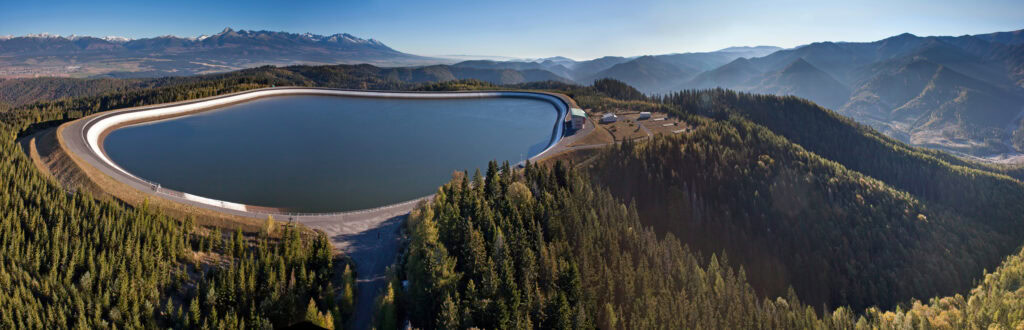
As the largest electricity producer in Slovakia, Slovenské elektrárne play a key role in the country’s energy transition. Thanks to a generation mix primarily based on nuclear and hydropower, the company is able to deliver electricity with a minimal carbon footprint while supporting the decarbonisation of the broader economy.
At the same time, the company continues to invest in additional low-carbon solutions, including the completion of Mochovce Unit 4, flexibility projects, battery storage systems, and the development of small modular reactors (SMRs).
The repeated inclusion of Slovenské elektrárne among Europe’s climate leaders demonstrates that even a large-scale energy company can be part of the solution to climate challenges.
The Europe’s Climate Leaders ranking has been published by Financial Times and Statista since 2021. Each year, around 600 European companies are selected based on their achievements in reducing greenhouse gas emissions intensity.
In the latest edition, the evaluation considers not only the reduction in emissions intensity, but also the absolute reduction of emissions and additional factors such as climate commitments and transparency in reporting.
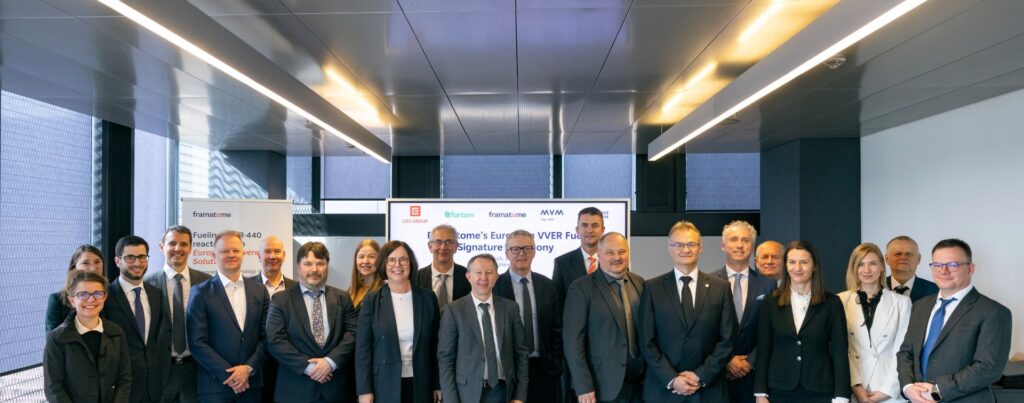
The overall project is in its first phase consisting of the design activities of the VVER 440 fuel assembly and its associated transport container. Further on, a Lead Test Assembly (LTA) program will be performed, enabling the reloads licensing with each Nuclear Power Plant concerned. All of this will be made possible through an integrated and robust 100% European design and supply chain involving Framatome’s French and German fuel fabrication facilities.
“Today we celebrate far more than a technical accomplishment— we celebrate a shared vision and a strong teamwork across borders. I warmly congratulate all Framatome teams and extend my sincere gratitude to ČEZ, Fortum, MVM Paks NPP, and Slovenské elektrárne for the trust they have placed in Framatome. Their confidence has been essential in bringing this ambitious project to life. This agreement reflects our shared intention to work together over the long term, fostering continuous improvement, innovation, and operational excellence in nuclear fuel supply,” said Grégoire Ponchon, CEO of Framatome.
“ČEZ Group has long focused on diversifying its nuclear fuel suppliers, which is a key priority for strengthening supply security, enhancing energy security, and ensuring the efficient operation of our power plants. Our participation in the development of a new fuel design for VVER‑440 units operated at the Dukovany Nuclear Power Plant therefore represents a logical and strategically important next step,” said Bohdan Zronek, Member of the Board of Directors and Director of the Nuclear Division of ČEZ Group.
“Security of energy supply is a strategic priority for us at Fortum. Diversifying the entire nuclear fuel value chain strengthens our ability to supply electricity reliably to our customers. It is great that we can now, through European cooperation, develop a solution that benefits several companies at the same time and can enhance energy security in many European countries,” said Petra Lundström, Executive Vice President responsible for Fortum’s nuclear operations.
“MVM Paks Nuclear Power Plant plans responsibly for the long term and is preparing a further extension of the operating life of its active units. An essential part of this work is to anticipate the conditions of our operation for decades and ensure them in fuel procurement as well. Preserving and strengthening energy sovereignty, guaranteeing the security of supply and maintaining environmentally friendly, clean electricity production are of key importance for Hungary, to which the newly signed agreement also significantly contributes.”, said Péter János Horváth, CEO of MVM Paks NPP.
“Nuclear power is a pillar of the energy security for Slovakia and all of Europe. If this pillar is to be strong on long-term basis, we must have control over one of the most important inputs, namely nuclear fuel. Long-term safe operation of nuclear power plants requires a stable and diversified fuel chain. Involvement of Slovenské elektrárne in the development of European fuel for VVER‑440 reactors is a logical step in the management of these technological and contractor-related risks. This project facilitates the operation predictability and improves the resilience of nuclear power industry within the European Union,” declared Branislav Strýček, Chairman of the Board of Directors and CEO of Slovenské elektrárne.
Framatome and seventeen stakeholders, including these four European VVER utilities, have been working on the development of this new VVER fuel technology, including within the framework of the Framatome Safe and Alternative VVER European Project – “SAVE” - funded under the Euratom Research and Training Programme by the European Union.
Nineteen VVER reactors are currently in operation in the European Union, including fifteen VVER 440 MW reactors in the Czech Republic, Finland, Hungary and Slovakia. Framatome aims at manufacturing its first own-design lead fuel assemblies starting from 2028. It intends to contribute to the safe, reliable and uninterrupted operation of the existing nuclear fleet and prepare for the next generation of nuclear fuel.
Lionel Gaiffe, senior executive vice president of the Fuel Business Unit at Framatome declared: “This milestone for Europe’s energy future reflects our commitment to supporting both the nuclear industry and the energy policies of the European countries operating VVER reactors. Framatome is the only fuel supplier able to guarantee a 100% sovereign European technology.”
Framatome is an international leader in nuclear energy recognized for its innovative, digital and value-added solutions for the global nuclear fleet. With worldwide expertise and a proven track record for reliability and performance, the company designs, services and installs components, fuel, and instrumentation and control systems for nuclear power plants. Its more than 22,000 employees work every day to help Framatome’s customers supply ever cleaner, safer and more economical low-carbon energy.
Visit us at www.framatome.com and follow us on LinkedIn.
Framatome is owned by the EDF Group (80.5%) and Mitsubishi Heavy Industries (MHI – 19.5%).
ČEZ Group is one of the most prominent energy companies in Central Europe and the leading producer of electricity in the Czech Republic. It also serves as a key operator of the country's electricity and gas distribution networks.
In the nuclear sector, ČEZ Group ensures the safe, reliable, and highly efficient operation of the Dukovany and Temelín nuclear power plants, which constitute the backbone of the Czech Republic’s zero‑emission electricity generation. In 2025, these facilities supplied more than 32 TWh of electricity.
ČEZ further plays a critical role in advancing the next phase of nuclear development in the Czech Republic. The Group participates in the preparation of the new nuclear unit at Dukovany, in the planning of additional large‑scale units, and in the development of small modular reactors (SMRs). These initiatives form part of the strategic framework VISION 2030 – Clean Energy of Tomorrow, aimed at building a low‑emission energy mix, strengthening national energy security, and ensuring stable long‑term electricity supply.
Beyond its nuclear activities, ČEZ operates in renewable energy, distribution, energy services, and smart energy infrastructure. Across these areas, the Group focuses on digitalization, decarbonization, and the deployment of efficient and forward‑looking energy solutions. ČEZ is majority‑owned by the state and ranks among the largest publicly traded companies in Central Europe.
Fortum is a Nordic energy company. We generate and deliver reliable energy to our customers and the Nordic energy system while at the same time helping industries decarbonise their processes and grow. Our core operations comprise efficient and best-in-class low-carbon power generation, customer services, and heating and cooling. Fortum’s power generation is already 99% from renewable or nuclear sources with one of the lowest specific CO2-emissions in Europe. We are guided by our ambitious SBTi-validated emission reduction targets on our way towards net-zero by 2040. For our ~4,500 employees, we commit to be a safe and inspiring workplace. Fortum's share is listed on Nasdaq Helsinki. fortum.com
The MVM Paks Nuclear Power Plant has been supplying Hungary's residential and industrial consumers with safe, cheap and environmentally friendly electricity for 40 years. The power plant operating with 4 units has a nominal capacity of 2,000 megawatts, which provides almost half of Hungary's electricity production. Since the beginning of its operation, the nuclear power plant has been developing its systems with modifications that enhance safety, sustainability and cost-effectiveness, and operates at an internationally recognized high level of safety.
With more than 70% share in the overall electricity generation in Slovakia, Slovenské elektrárne, a.s. is the largest electricity producer in the country. After having shut down the last coal power plant at the end of the first quarter of 2024, it generates all electricity free of direct CO2 emissions. It operates 5 nuclear units, 31 hydro power plants, and 2 photovoltaic plants.
The Company’s commitment to generate electricity from low-carbon sources makes it the leader in sustainable energy generation in the Central and Eastern Europe. The company has been included in the prestigious Europe's Climate Leaders index, which The Financial Times and Statista have been producing since 2021, four times.
2025 was a year of breaking records in Slovenské elektrárne. In the position of the largest electricity producer in Slovakia, Slovenské elektrárne produced 21,013 GWh of electricity free of direct CO2 emissions in 2025 (after having deducted the station service consumption, the company supplied 18,804 GWh to the grid). For illustration, production of 21,013 GWh of electricity free of emissions would be sufficient for 1.75 to 3 million households, if we take into account a standard Slovak household with electrical heating.
Nuclear power plants comprised the key pillar of Slovenské elektrárne’s portfolio: thanks to the high availability of the units and reduced outage durations (i.e. the scheduled “technical review” of the reactor in order to carry out important inspections, refuelling, and maintenance) they achieved the highest supply in their history. At the same time, the company has been using its pumped storage power plants to compensate for the effects of the drought and made use of the market price signals.
The five nuclear units demonstrated high level of stability. Slovenské elektrárne preveted enforced outages and had less total outage days than in 2024, which was reflected in better generation results. The company actually achieved 17,930 GWh of emission-free electricity from the nuclear with five operated units, which would be enough for approximately 1.5 to 2.6 million Slovak households. This is a new record!
“With respect to the operation, 2025 was a successful year for the nuclear power plants. We managed to keep the units at slightly higher power than planned. Colder summer helped us too, so we usually did not need to reduce power as we had to during the previous hot summers,”
Ján Mazánik, Manager of the Trade in Regulating Services and Resource Employment
The final quarter of last year further increased our performance. The shortest general outage in the history of unit 2 at Mochovce (17.97 days) helped significantly. In December 2025, we supplied 1,711,769 MWh from the nuclear sector, which is the highest production for one month in the history of our nuclear power plants.
Slovenské elektrárne hydro power plants produced 1,691 GWh last year. The beginning of the year brought low levels in the Liptovská Mara and Orava reservoirs, which struggled with exceptional drought for almost three seasons. This resulted in the lowest supply from the run-of-river power plants in the history – 1,085 GWh. The autumn rains mitigated the impact but they could not change the trend of the year.
Slovenské elektrárne partially compensated for the unfavourable weather conditions with the pumped storage power plants, which were employed significantly more than planned. They produced 582 GWh (plan 377 GWh) with the consumption for pumping at almost 774 GWh (plan 512 GWh).
“Many times at noon with surplus of energy from solar plants, the electricity price was decreasing to zero and sometimes even to negative values, while the morning and evening peaks brought high prices. This was an ideal profile for pump operation when the electricity was cheap and turbine operation during peaks”, Ján Mazánik explained.
In 2025, the company employed the pumped storage power plants the most in the history of more than 20 years since they have been managed by the Slovenské elektrárne dispatching.
2025 brought the most trading periods with negative prices in history. This is the direct effect of the fast growth of the installed capacity from unpredictable renewables in the interconnected European grid. For this reason, the character of the daily market changed from hourly to 15‑minute trading as of October 2025. A shorter product reflects the real situation better and brings higher price differences between 15-minute intervals.
According to J. Mazánik, the volatility will be emphasised even further and the price differences between the 15-minute intervals will grow even more. In order to make better use of the flexibility on the changing market in trading, the company is preparing some adjustments in the operation of the hydro power plants within the Váh River Cascade to 15‑minute mode.
In addition, the portfolio of Slovenské elektrárne will be enriched by the battery energy storage system at Nováky this year. There will be two systems with the output of 36 MW and capacity of 72 MWh. These are now going through energy tests with the dispatching. Their commissioning is scheduled for March 2026. The batteries will complement the pumped storage power plants and improve our response to fast price volatility.
Experience from the last year can serve the company as a well-proven recipe for the following season: stable generation at nuclear, flexible pumped storage power plants, and intelligent profit from intraday opportunities. In addition, the Nováky BESS and technological readiness for 15-minute trading will be added to the energy portfolio of Slovenské elektrárne.
With more than 70% share in the overall electricity generation in Slovakia, Slovenské elektrárne, a.s. is the largest electricity producer in the country. After having shut down the last coal power plant at the end of the first quarter of 2024, it generates all electricity free of direct CO2 emissions. It operates 5 nuclear units, 31 hydro power plants, and 2 photovoltaic plants.
The Company’s commitment to generate electricity from low-carbon sources makes it the leader in sustainable energy generation in the Central and Eastern Europe. The company has been included in the prestigious Europe's Climate Leaders index, which The Financial Times and Statista have been producing since 2021, four times.
Slovenské elektrárne, a.s. has two shareholders. Slovak Power Holding B.V. (SPH) owned by a Czech energy group Energetický a průmyslový holding (EPH) is the majority shareholder with a 66% share. The second shareholder is the Slovak Republic holding 34% of the company.
The SE Integrator Project on the Čierny Váh River is among the first initiatives in Europe to combine a traditional pumped storage power plant (PSPP) with a modern battery storage on a large scale. The hybrid model will significantly increase the balancing capacity of the Slovak electrical grid and will also contribute to the stabilization of regional markets in Central Europe. The first phase of the Slovenské elektrárne project is being funded by the European Commission with a grant of € 62.63 million under the Connecting Europe Facility (CEF) programme. A total of € 650 million will be allocated to 14 cross-border energy projects.
“We are proud that Slovakia will have one of the most technologically advanced pumped storage power plants in Europe. The introduction of variable speed and the largest frequency converters of their kind in pumped storage power engineering is a breakthrough that will take our flexibility to an entirely new level. We have demonstrated that even a country of our size can deliver projects of European significance.”
Branislav Strýček, Chairman of the Board of the Board of Directors and CEO of Slovenské elektrárne, a.s.
The Čierny Váh power plant is the largest pumped storage power plant in Slovakia with an installed capacity of 735 MW and an annual generation of approximately 200 GWh. Its hybridization will significantly expand its functions:
“A strong and independent Energy Union, which brings clean and cheap energy to consumers, must be based on an integrated and secure energy infrastructure. The projects we financially support will strengthen Europe's competitiveness and energy security and put us on a stable path to independence.”
Dan Jörgensen, European Commissioner for Energy
The growing share of wind and solar power in Europe significantly increases the need for long-term electricity storage and its balancing. Pumped storage plants provide nowadays more than 90% of all large-scale storage in the EU and are the pillar of grid stability. Hydropower is still the largest low-carbon power source in the EU. Slovenské elektrárne company operates 31 hydroelectric power plants with an installed capacity of 1,653 MW, out of which 916.4 MW are pumped storage power sources (Čierny Váh, Liptovská Mara, Ružín, Dobšiná). Hydropower sources account for an average of 11% of SE’s annual electricity generation of and are among the fastest deployable balancing capacities in the country.
The hybrid regime of Čierny Váh will enable Slovakia to provide primary, secondary and tertiary balancing from a single source, thanks to a unique combination of pumped storage technology and battery storage, capable of responding almost instantly to fluctuations in generation from renewables. At the same time, it will create some space for cross-border trading of balancing energy on the European MARI and PICASSO platforms. This will increase Slovakia's integration into the single market with ancillary services. Thanks to significantly expanded balancing capabilities, the modernized Čierny Váh will be able to support grid stability of the neighbouring countries - Hungary, Poland and the Czech Republic - and, if necessary, Ukraine, making it one of the key elements of regional energy security.
Having more than 60% share in the overall electricity production in Slovakia, Slovenské elektrárne, a.s. is the largest electricity producer in the country. After having shut down the last coal power plant in 2024, it generates all electricity without direct CO2 emissions. It operates 5 nuclear units, 31 hydro power plants, and 2 photovoltaic plants.
The Company´s commitment to generate electricity from low carbon sources makes it the leader in sustainable energy generation in the Central and Eastern Europe. The Company was listed four times in the prestigious index Europe's Climate Leaders, developed by The Financial Times and Statista since 2021.
Slovenské elektrárne, a.s. has two shareholders. The majority shareholder, with 66% share, is Slovak Power Holding B.V. (SPH) owned by a Czech energy group Energetický a průmyslový holding (EPH). The second shareholder is the Slovak Republic holding 34% of the company.