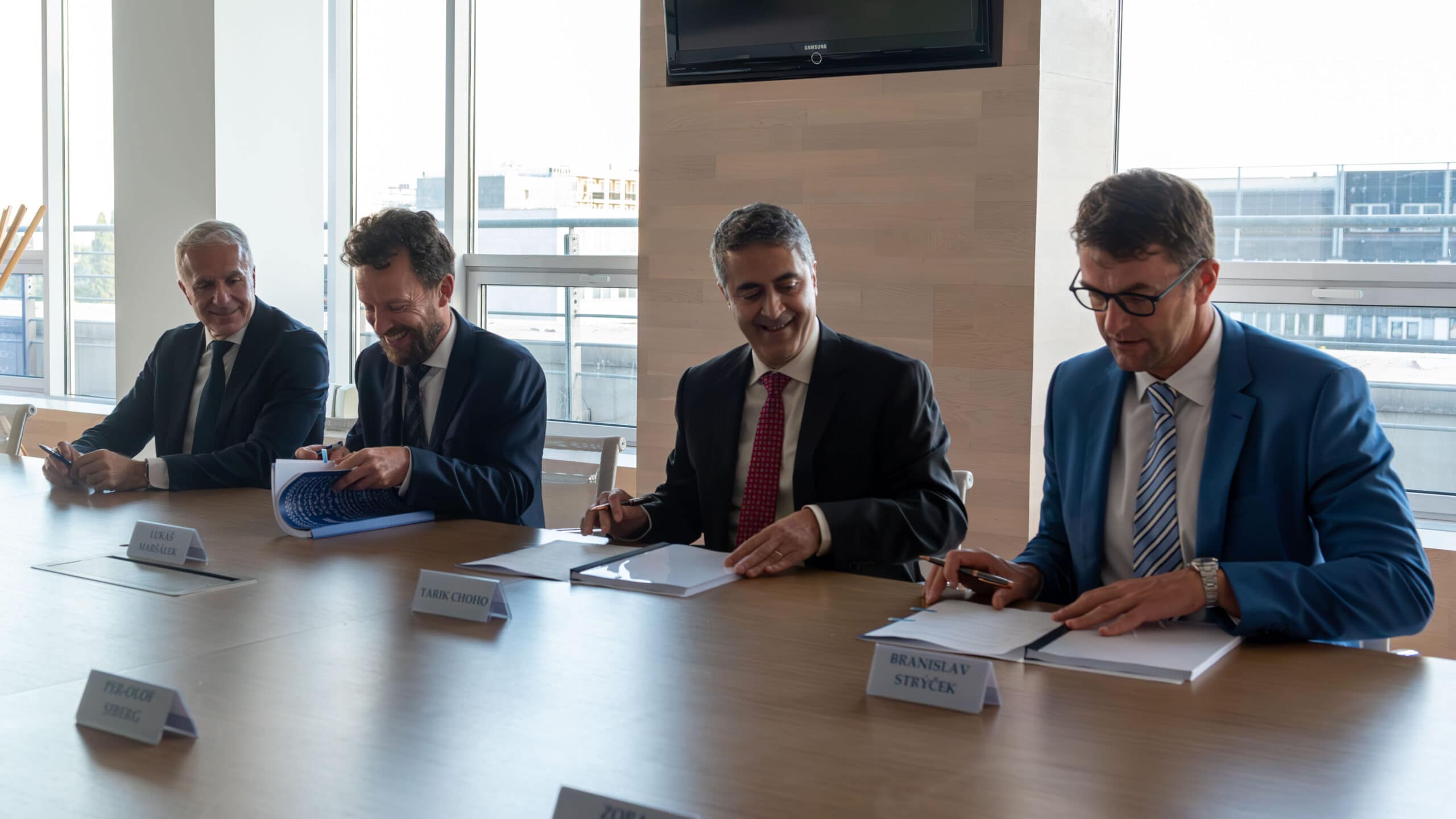
The signing of the contract follows a Memorandum of Understanding that was signed by Slovenské elektrárne and Framatome in May 2023, which created the basis for further development of long-term relations in the field of nuclear energy.
The aim of the agreement is a diversification of nuclear fuel supplies for the power plants of VVER 440 design in Slovakia. First fuel deliveries from Framatome, based on the proven, reliable, and efficient fuel used by the European VVER reactors, are expected in 2027.
„Securing contract with one of the world´s leading nuclear fuel supplier for our power plants is an important step in strengthening Slovakia’ energy security. Our nuclear power plants represent an important pillar in our country's energy mix, therefore I consider it to be crucial to secure nuclear fuel supply diversification for their stable operation.“
Branislav Strýček, Chairman of the Board and General Director of Slovenské elektrárne, a.s.
„This contract marks a new milestone in the longstanding and fruitful cooperation between Framatome and Slovenské elektrárne. We are pleased to contribute to the diversification of Slovakia’s fuel supply and to the safe, reliable, and uninterrupted operation of the Bohunice and Mochovce nuclear power plants.“
Lionel Gaiffe, senior executive vice president of the Fuel Business Unit at Framatome


More than 70 % of all electricity produced in Slovakia comes from Slovenské elektrárne. Thanks to its 5 nuclear units and 31 hydroelectric power plants, and after shutting down its coal-fired facilities, the company generates 100 % of electricity free of direct CO2 emissions. The company was repeatedly included in the prestigious Financial Times: Europe’s Climate Leader index since it was introduced in 2021.
Framatome is an international leader in nuclear energy recognized for its innovative, digital and value added solutions for the global nuclear fleet. With worldwide expertise and a proven track record for reliability and performance, the company designs, services and installs components, fuel, and instrumentation and control systems for nuclear power plants. Its more than 18,000 employees work every day to help Framatome’s customers supply ever cleaner, safer and more economical low-carbon energy. Framatome is also present in Slovakia with over 100 employees and has supplied the instrumentation and control system for the new nuclear units at Mochovce 3 and 4.
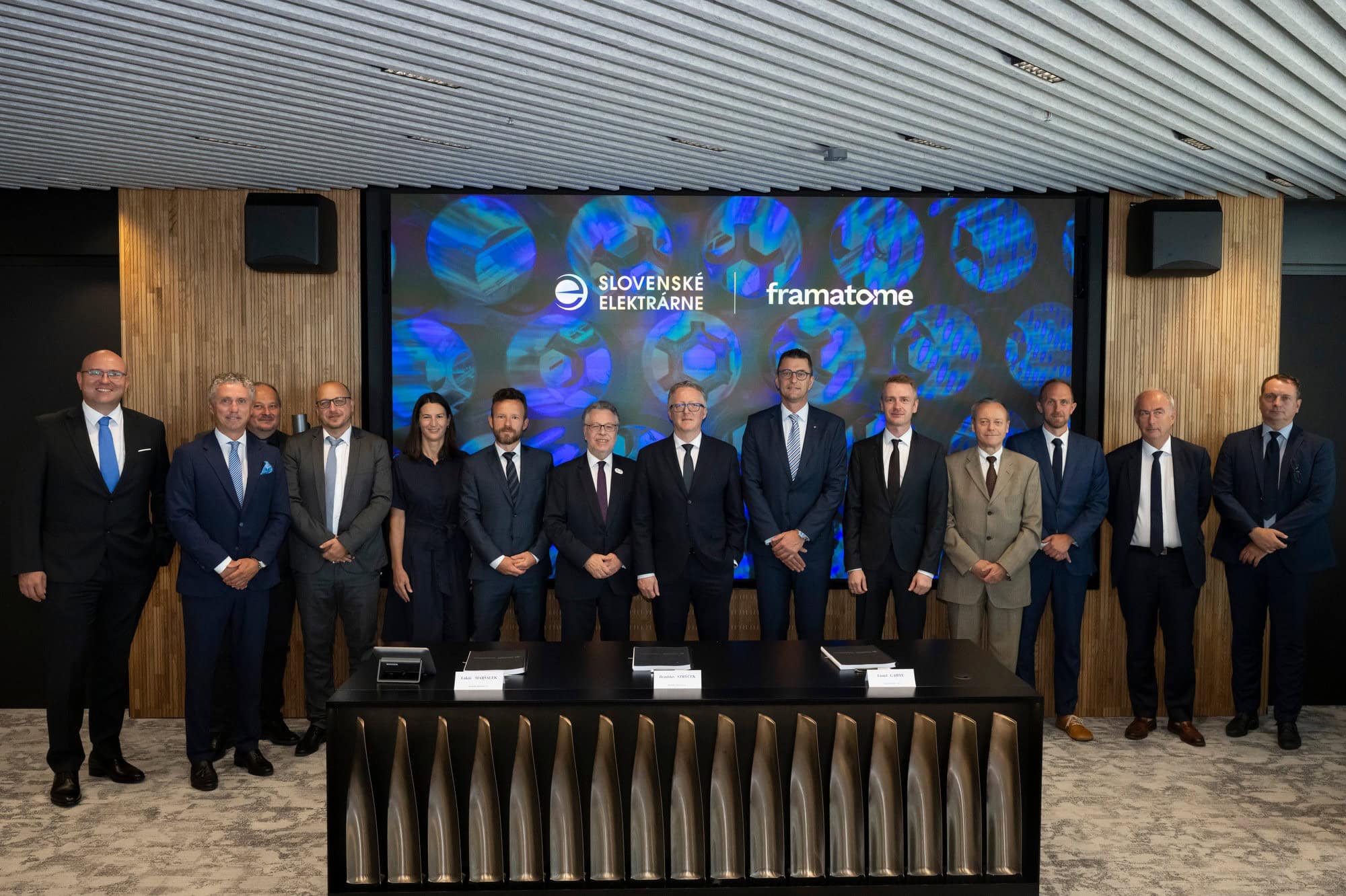
As a member of the executive team at Slovenské elektrárne, Richard Davis will be also be responsible for further strengthening our nuclear safety culture, developing our plant leadership teams, and ensuring the implementation of industry best practices at our plants.
Prior to the role of CNO within Slovenské elektrárne, Mr. Davis served as an Advisor to the Deputy Chief Nuclear Officer where he was responsible for the development of an organizational improvement plan designed to further improve our nuclear power plant operations. R. Davis has a broad background within the nuclear industry and over 35 years of commercial nuclear power plant experience, most recently at the Barakah Nuclear Power Plant in the United Arab Emirates, where he served in multiple advisory and leadership roles during construction and power operations including Vice President of Security and Plant Manager for unit 3/4.
He has experience working with the World Association of Nuclear Power Operators (WANO) as a loaned employee with the Institute of Nuclear Power Operations (INPO), where he developed a fundamental respect for the need to continually assess station performance against industry best performers. Richard Davis has successfully led efforts to improve organizational safety culture at multiple plants during his career. These experiences will allow him to support improvements in Slovak nuclear power plants and support Slovenské elektrárne as it continues to pursue higher standards of excellence.
Richard Davis received a Bachelor of Science Degree in Management and Organizational Leadership from Milliken University and a Master of Business Administration Degree (MBA) from Pennsylvania State University. Mr. Davis completed the Senior Reactor Operator Management Certification at Clinton Power Station and he obtained certification within the National Registry of Radiation Protection Technologists.
The prestigious British economic daily Financial Times ranks Slovenské elektrárne among the top companies from all over Europe that protect the climate and radically reduce emissions, and thus are listed in the Europe's Climate Leader 2024 ranking. The Slovakia’s largest power producer ranked among the climate elite already for the third time – in 2021, 2022 and also in 2024.
The newspaper has gradually extended the list; there were 300 companies in it in 2021 and as much as 600 companies qualified in 2024. They were the best in reducing greenhouse gas emissions compared to their sales in the last 5 years. In the period 2017 – 2022, Slovenské elektrárne reduced their emission intensity by as much as 45 %, thus they prevented release of more than one million tons of CO2 emissions. Slovenské elektrárne achieved the largest reduction especially in the last two years.
“Climate protection is our priority and it gives us satisfaction that also the world and London’s Financial Times perceive us this way. The list evaluates achievements from the past, but we are looking ahead where we can see our company generating one hundred percent of electricity without direct carbon dioxide emissions. Our vision has been changing to reality because we definitively terminated coal combustion in Nováky in December and in Vojany in March.”
Branislav Strýček
Chairman of the Board of Directors and General Director of Slovenské elektrárne
Thanks to its low-carbon sources – nuclear and water, the largest electricity producer in Slovakia delivered as much as 96.5 % of electricity without CO2 emissions in 2023. Then, as they phased out the coal burning power plant in Nováky at the end of 2023 and the power plant in Vojany in the beginning of this year, Slovenské elektrárne has been generating 100 % of electricity without direct CO2 emissions. A significant ecological effect was reached by the commissioning of the third unit in Mochovce that saves up to 2.6 million tons of carbon dioxide emissions per year. So it is comparable to the disappearance of a million cars with internal combustion engines from the roads.
After launching Mochovce Nuclear Power Plant Unit 3, Slovenské elektrárne intensively focus on the completion of Unit 4. At the same time, the company prepares also other projects. Their importance is growing as weather-depending renewable resources are on increase in the European grid. For example, it includes battery energy storage systems at power plants in Dobšiná, Mikšová, and at the most powerful pumped-storage power plant of Čierny Váh, as well as in the site of the former coal power plant in Nováky. There should also be located the currently biggest photovoltaic power plant in Slovakia, with a capacity of 10 MWp.
Slovenské elektrárne is also participating in the international Phoenix project that should draft a feasibility study on small modular reactors in one of five identified localities in Slovakia.
In 2023, thanks to the mix consisting mainly of nuclear and hydro, Slovenské elektrárne delivered as much as 96.5 % of electricity without direct CO2 emissions. They generated 21.660 terawatt hours of electricity, out of that, the net delivery was 19.570 TWh after the home consumption deduction.
Our five nuclear units generated 18.344 TWh and delivered almost 16.967 TWh to the grid in the last year. The last time when more than 18 TWh was generated from nuclear in Slovakia was in 2006 when six nuclear units were operated. They generated 2,058 GWh of electricity in their 31 hydro power plants.
The brown coal power plant in Nováky was decommissioned by the company in December 2023 and the black coal power plant in Vojany at the end of March 2024.
The company has two shareholders. The majority shareholder is Slovak Power Holding B.V. (SPH) owning the 66.0000000523 % share of the registered capital. 50 % share of the registered capital in SPH is owned by EP Slovakia B.V. (a daughter company of the EPH Group) and the other 50 % is owned by Enel Produzione S.p.A (a daughter company of the Enel Group).
The minority shareholder of Slovenské elektrárne with the 33.9999999477 % share of the registered capital is the Slovak Republic represented by the Ministry of Economy of the Slovak Republic.
Representatives from the companies Energoatom, Fortum, ČEZ, Kozloduy NPP, MVM Paks, and Slovenské elektrárne, a.s. were exchanging their experience on how they proceed in implementing the fuel from the Westinghouse company for the operated reactors VVER-440 and VVER-1000.
“Nuclear fuel diversification is essential for increasing energy security and stable operation of our nuclear power plants. Extensive participation at the forum on nuclear fuel in Bratislava is a proof of commitment to implement this objective as soon as possible.”
Branislav Strýček, Chairman of the Board of the Board of Directors and General Director of Slovenské elektrárne
The Westinghouse company, as the APIS project leader (Accelerated Program for Implementation of secure VVER fuel Supply), financed by the European Commission, presented latest information on development and construction of the new generation fuel and the intention to harmonise the access to the licensed VVER fuel.
“We are delighted to share the achievements of this key program to ensure energy security and supply diversification for our customers in the region. There were many great achievements in the past years and still a lot of work ahead of us.”
Tarik Choho, Westinghouse President of Nuclear Fuel
The significance of the forum, which was held at the headquarters of Slovenské elektrárne in Bratislava was highlighted by the presence of Stefano Ciccarello, Acting Director General of the Euratom Supply Agency.
Detailed reviews included information on strategy and process of fuel implementation, new fuel designs, upgrade of the production plant, supplies and NPPs operation.
The Ukrainian company Energoatom has been currently testing the first fuel load from Westinghouse company in their VVER unit at Rivne nuclear power plant.


Slovenské elektrárne concluded an agreement on fuel supplies with the Westinghouse company in August last year. The first fuel supplies, which are the subject of the agreement, are expected approximately one year after getting an approval for its use in compliance with the applicable legal regulations in the Slovak Republic.
The fuel, which will be supplied by the Westinghouse Electric Sweden AB company, must first pass the licencing process, i.e. approval for its use in the conditions of reactors at Slovenské elektrárne, where it must be proved that its use would be safe.
The corner-stone of the diversification strategy of Slovenské elektrárne is to support every initiative and cooperation in order have a portfolio of at least two alternative nuclear fuel suppliers and several potential suppliers of materials and services across the entire supplier chain for nuclear fuel production. Therefore, Slovenské elektrárne have actively joined all initiatives aimed at gradual diversification of fuel supplies for VVER 440.
The Westinghouse company has more than 60 years of experience in nuclear power industry, its technology is a foundation of almost half of all nuclear power plants in the world. Westinghouse has been providing services for several years for VVER reactors, until now mainly for the VVER 1000 design.
On Thursday, 9 November, Slovenské elektrárne, the Ministry of Economy of the Slovak Republic and the US Department of State held the opening event of the Project Phoenix Workshop in Bratislava Reduta. Slovakia, the Czech Republic, and Poland were presented this summer as the winning countries to receive a Project Phoenix grant to fund a feasibility study of small modular reactors. The project, which aims to promote a shift away from coal combustion, was supported by the US government with up to USD 2 million for each country.
Thanks to the feasibility study, it will be possible to assess the suitability of small modular reactors in Slovak conditions and to propose steps for their possible future construction.
"We will take a closer look at five Slovak sites for the possible future construction of small modular reactors, namely the site of the existing nuclear power plants Jaslovské Bohunice and Mochovce, the site of the Nováky and Vojany thermal power plants and the site of U.S. Steel. On behalf of the Slovak representatives in the Phoenix consortium, I can say that this is the beginning of an important cooperation with our American partners, with the aim of strengthening energy security and fulfilling our commitment to clean and reliable energy production. This success is an important first step, but we still have a lot of work ahead of us," said Branislav Strýček, Chairman of the Board of Directors and CEO of Slovenské elektrárne, a. s., at the joint press conference.
"The past year reminds us that energy security is a key component of ensuring national security. I’m happy that the Department of State and private industry are partnering with the governments and companies of this region to find solutions that directly support countries and companies’ energy, environmental, and economic goals,“ said Guatam A. Rana, US Ambassador to Slovakia. The programme reckons that small modular reactors are a stable and carbon-free alternative to coal-fired power generation and are safer and more flexible than large nuclear reactors.
"The study will analyse the costs of construction and operation of a small modular reactor and prepare an overall schedule for the permitting process and construction," explained Deputy Prime Minister and Slovak Economy Minister Denisa Saková. She stressed that the grant application was the first step in the implementation of the partnership defined in the Memorandum of Cooperation signed in June 2023 by Slovenské elektrárne, the Ministry of Economy of the Slovak Republic, U.S. Steel Košice, the Slovak electricity transmission system operator SEPS, the nuclear power engineering company VUJE, the Nuclear Regulatory Authority of the Slovak Republic and the Slovak University of Technology in Bratislava.

Project Phoenix was introduced by US Presidential Climate Envoy John Kerry at the UN Climate Change Conference in Sharm El-Sheikh, Egypt (COP27). The name is symbolic and refers to the mythical Phoenix, a bird known for its cycle of death and rebirth. According to legend, when Phoenix reaches the end of its life, it burns to ashes, from which a new Phoenix is then born. In the context of this project, it symbolises the transformation of coal-fired power plants into plants using small modular nuclear reactors. Thus, just as Phoenix rises from the ashes, these power stations should undergo a radical change, and replace polluting coal-fired power generation with clean, carbon-free power generation in small modular nuclear reactors.
The project will be implemented under the U.S. Department of State's FIRST (Fundamental Infrastructure for Responsible Small Modular Reactor Technology) program in partnership with the U.S. Department of Commerce's SMR PPP (Small Modular Reactor Public-Private Program). This programme aims to promote transatlantic cooperation in the deployment of small modular reactors in Europe and Eurasia.
Approximately 70% of all electricity generated in Slovakia comes from Slovenské elektrárne. Thanks especially to its nuclear power plants, Slovakia’s largest producer supplies up to 95% of electricity without emitting carbon dioxide, one of the greenhouse gases responsible for global warming. The company was the only one in Slovakia and Eastern Europe to be included in the prestigious index Financial Times: Europe’s Climate Leader 2022 for reducing emissions.
Seven out of ten Slovaks support nuclear energy. Some 60% think that generating electricity at a nuclear power plant is safe. This is shown by the results of a poll by the ACRC agency for the Slovak Foreign Policy Association and Slovenské elektrárne, conducted at the turn of June and July 2022.
In addition to nuclear power plants, the company also operates 31 hydroelectric, two coal and two photovoltaic power plants. In the end of 2022, its total capacity was 4143.8 megawatts.
The company has two shareholders. The majority shareholder is Slovak Power Holding B.V. (SPH), owning 66.0000000523% of the registered capital. A 50% stake in the registered capital of SPH is owned by EP Slovakia B.V. (a subsidiary of the EPH Group) and the remaining 50% is owned by Enel Produzione SpA (a subsidiary of the Enel Group).
Slovenské elektrárne’s minority shareholder, with a 33.9999999477% share in the registered capital, is the Slovak Republic, represented by the Ministry of Economy of the Slovak Republic.
Slovenské elektrárne completed the power start-up of the third Mochovce unit with the last test in the active test phase - 144-hour trial run at full reactor power. The 6-day run demonstrated that the design parameters of the new unit were met and proved that it is capable of safe operation. It has delivered more than 1.2 million megawatt-hours since it was first connected to the grid on 31 January. This volume of electricity produced without carbon dioxide emissions is enough to cover the annual consumption of almost half a million Slovak households.
“I declare with pride and satisfaction that we have successfully completed the last trial run test at Mochovce 3. This nuclear unit is an important pillar of our efforts to ensure a stable and secure supply of electricity for Slovakia. I thank all our employees and partners for their tireless work and dedication that made this success possible. We are confident that Unit 3 will make a long-term contribution to Slovakia's energy mix and help us meet our climate change commitments. We aim to continue investing in future technologies to ensure a sustainable future for the people in Slovakia and Europe.”
Branislav Strýček, Chairman of the BoD and General Director of Slovenské elektrárne
The active testing phase began with the physical start-up of the new unit on 9 September 2022 by loading the first fuel assembly into the reactor. Over the course of thirteen months, the new unit had to undergo hundreds of different tests – first without a fission reaction in the reactor, and then progressively at different reactor power levels after reaching the minimum power. The aim was to test the unit in a variety of different, even extremely unlikely operating conditions, to detect and remove any obstacles that would prevent reliable and safe operation in the future. In January 2023, Mochovce Unit 3 was already in the power start-up phase and the reactor power was step-by-step increased.
“After more than twenty years, we have commissioned another nuclear unit in Slovakia. Its commissioning strengthened the collective of nuclear experts not only from Slovakia. This is an exceptional team, because even colleagues who experienced the commissioning of units in the former Czechoslovakia, have worked at this project together again. It is important that we pass on the baton to the next generation and maintain the knowledge necessary for the energy security of our country."
Juraj Krasňanský, Director of Completion and Commissioning of Mochovce 3 and 4
The complexity of the commissioning process of the new nuclear unit is also evidenced by the enormous numbers of installed plant components that had to be tested and harmonised together during the active testing phase. The third Unit is approximately the size of Bratislava Castle, and in its 1400 rooms there are almost 100 thousand pieces of equipment with 5,500 kilometres of cables and 175 kilometres of piping.
“With the completion of the commissioning of Unit 3, we have welcomed a new unit to our nuclear fleet. The plant successfully passed demanding tests, including disconnection from the power grid at full power. This means that Unit 3 will be able to cope with such challenging situations. Today, we are already preparing for its first planned overhaul and normal operational activities.“
Martin Mráz, director of Mochovce NPP
The new nuclear unit in Mochovce will cover almost 13% of total electricity consumption in Slovakia. In terms of electricity production, the country is becoming energy self-sufficient already this year.
Seven out of ten Slovaks support nuclear energy. Some 60% think that generating electricity at a nuclear power plant is safe. This is shown by the results of a poll by the ACRC agency for the Slovak Foreign Policy Association and Slovenské elektrárne, conducted at the turn of June and July 2022.
Approximately 70% of all electricity generated in Slovakia comes from Slovenské elektrárne. Thanks especially to its nuclear power plants, Slovakia’s largest producer supplies up to 95% of electricity without emitting carbon dioxide, one of the greenhouse gases responsible for global warming. The company was the only one in Slovakia and Eastern Europe to be included in the prestigious index Financial Times: Europe’s Climate Leader 2022 for reducing emissions.
In addition to nuclear power plants, the company also operates 31 hydroelectric, two coal and two photovoltaic power plants. In the end of 2022, its total capacity was 4143.8 megawatts.
The company has two shareholders. The majority shareholder is Slovak Power Holding B.V. (SPH), owning 66.0000000523% of the registered capital. A 50% stake in the registered capital of SPH is owned by EP Slovakia B.V. (a subsidiary of the EPH Group) and the remaining 50% is owned by Enel Produzione SpA (a subsidiary of the Enel Group).
Slovenské elektrárne’s minority shareholder, with a 33.9999999477% share in the registered capital, is the Slovak Republic, represented by the Ministry of Economy of the Slovak Republic.
Slovenské elektrárne increased the power output of the Mochovce nuclear power plant Unit 3 to 100% in the power escalation phase. Since its first connecting to the grid on 31 January 2023, the unit has, during tests, gradually supplied to the grid over 1 million megawatt-hours of electricity, sufficient to cover the average annual consumption of about 400,000 Slovak households. At full power, however, it can cover the consumption of up to 1.3 million households per year.
“This is a historic moment for Slovenské elektrárne and Slovakia. Congratulations and thanks to all colleagues, suppliers, regulatory, controlling and partner institutions, who have worked hard towards achieving this important milestone and ensuring that electricity production in Slovakia will be even cleaner and greener for today’s and future generations – for at least the next 60 years.”
Branislav Strýček, Chairman of the BoD and General Director of Slovenské elektrárne
In early September, Slovenské elektrárne completed all the power escalation tests at levels up to 90%. A report on the tests was prepared and submitted to the Nuclear Regulatory Authority of the Slovak Republic. The largest electricity producer in Slovakia thus fulfilled the conditions for another – this time the final – power escalation in Unit 3 reactor output up to 100%, which is its nominal power. Slovenské elektrárne will perform the final power escalation tests at this power level, followed by a 144-hour trial run.
“After the demanding tests required to prove the safe operation of Unit 3, we have reached the final stage. Full-scale tests are planned for end of September and the beginning of October, including the 144-hour trial run. All tests so far have confirmed the readiness of the new unit for long-term safe and CO2-free power generation.”
Peter Farkaš, Operations Manager at Mochovce NPP
The new nuclear unit in Mochovce will cover almost 13% of total electricity consumption in Slovakia. In terms of electricity production, the country is becoming energy self-sufficient already this year.
Seven out of ten Slovaks support nuclear energy. Some 60% think that generating electricity at a nuclear power plant is safe. This is shown by the results of a poll by the ACRC agency for the Slovak Foreign Policy Association and Slovenské elektrárne, conducted at the turn of June and July 2022.
Approximately 70% of all electricity generated in Slovakia comes from Slovenské elektrárne. Thanks especially to its nuclear power plants, Slovakia’s largest producer supplies up to 95% of electricity without emitting carbon dioxide, one of the greenhouse gases responsible for global warming. The company was the only one in Slovakia and Eastern Europe to be included in the prestigious index Financial Times: Europe’s Climate Leader 2022 for reducing emissions.
In addition to nuclear power plants, the company also operates 31 hydroelectric, two coal and two photovoltaic power plants. Their total capacity is 4143.8 megawatts.
The company has two shareholders. The majority shareholder is Slovak Power Holding B.V. (SPH), owning 66.0000000523% of the registered capital. A 50% stake in the registered capital of SPH is owned by EP Slovakia B.V. (a subsidiary of the EPH Group) and the remaining 50% is owned by Enel Produzione SpA (a subsidiary of the Enel Group). Slovenské elektrárne’s minority shareholder, with a 33.9999999477% share in the registered capital, is the Slovak Republic, represented by the Ministry of Economy of the Slovak Republic.
Slovenské elektrárne will supply electricity to Slovak households until the end of 2023 and in 2024 at a price at the level of 2022.
Based on the implementation agreement, the price of electricity will be, as agreed in the memorandum, 61.20 euros per MWh. The largest Slovak electricity producer will provide the baseload product to the intermediary of the transaction, the company Slovenský plynárenský priemysel, a.s. in an agreed volume of up to 6.15 TWh.
“I am very pleased that we were able to successfully conclude the agreement a few months before the end of the year 2023. Slovak households are thus guaranteed electricity on predictable and extremely favourable terms also for next year.“
Branislav Strýček, Chairman and CEO of Slovenské elektrárne, a.s.
At the same time, until 2025 (included), Slovak government has commited not to take any initiative to introduce new taxes that would burden Slovenské elektrárne, a.s. beyond the usual ones in the European Union. The European Commission has allowed the implementation of extraordinary measures to eliminate the impact of the increase in electricity prices for households also in 2024.
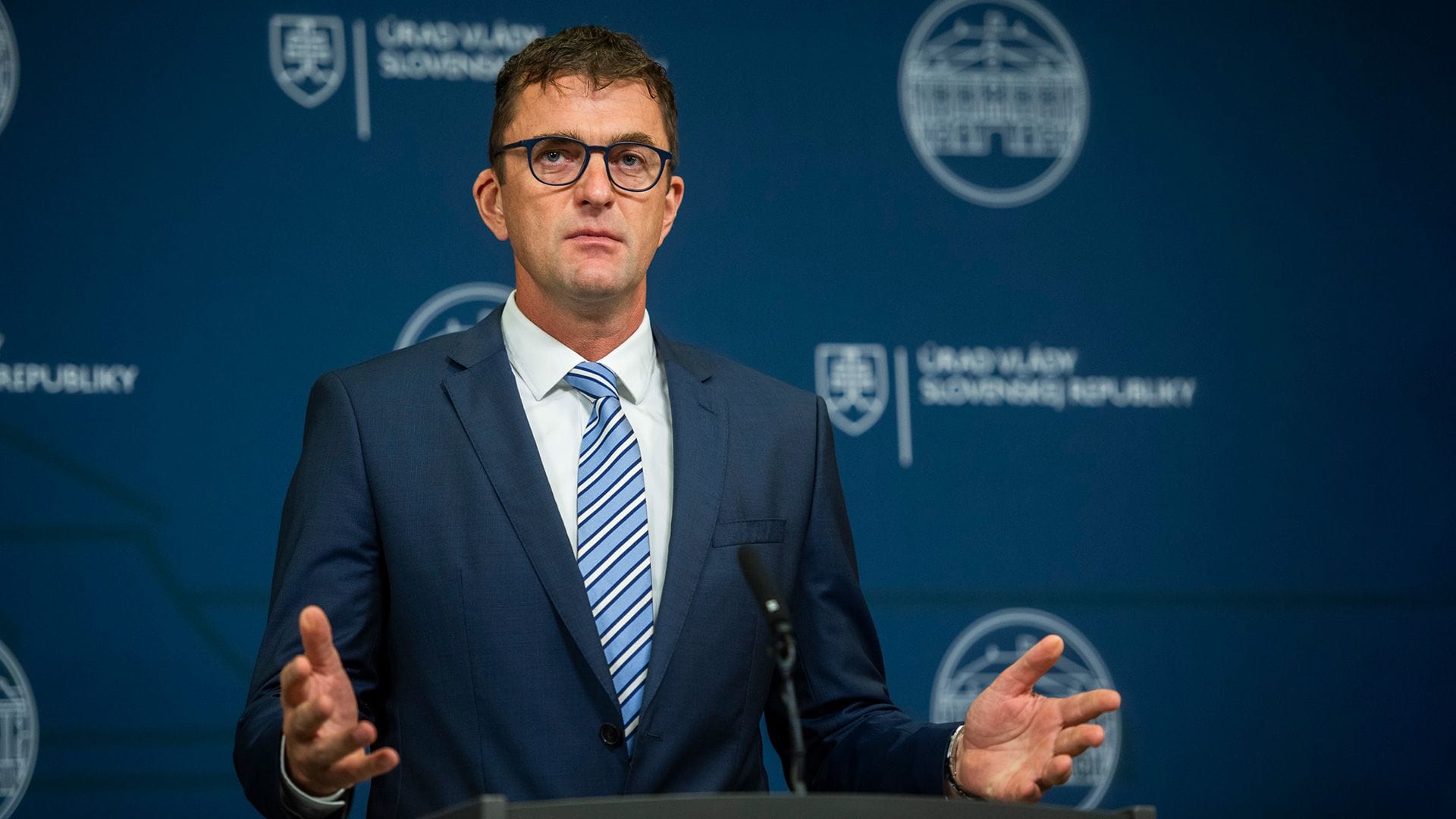
The competition was open to 17 countries in Central and Eastern Europe and was supported by the United States government with a total of $8 million. The winners were presented today by John Kerry, the US President’s Special Envoy for Climate Action, at an international event on nuclear energy in Bucharest, Romania. Along with Slovakia, the Czech Republic and Poland were also awarded grants. The Special Envoy furthermore announced that the next step in connection with the Phoenix project and the development of small modular reactors will be an event to be held in Bratislava in November. The US delegation will be led by John Kerry.
“I am very happy that we have succeeded in the international competition in such a major competition and that Slovakia will be the place where we launch this important project. The support we have received today represents a great opportunity. It means that Slovakia is one step closer to building a small modular reactor. We believe that the implementation of new technologies, including small modular reactors, is part of the solution to our energy needs. Small modular reactors are not intended to replace existing nuclear or renewable sources. Instead they complement our energy mix to ensure sufficient energy and protect the environment.”
Branislav Strýček, Chairman and CEO of Slovenské elektrárne
The Phoenix project aims to support the transition away from coal towards small modular reactors. The feasibility study will make it possible to assess the suitability of small modular reactors for Slovakia and to propose steps necessary for their potential future construction.
“The countries that have received support for feasibility studies project are pioneers, but they are not alone. We are all in this together, unlocking the next generation of clean base-load power that we can rely on when the wind is not blowing, the sun is not shining, and batteries are not storing. We need the economy moving and nuclear certainly can help. We need to use every tool possible to accelerate the clean energy transition and limit warming. No one technology is the answer to everything. This is the challenge of our lives, the challenge for generations to come, and we have to win. The good thing is that we can.”
John Kerry, US Government Special Envoy for Climate
The grant application for funding a feasibility study on small modular reactors was the first step in fulfilling the partnership defined in the Memorandum of Cooperation signed in June 2023. The signatories to the Memorandum, which aims to ensure conditions for supporting the development of small modular reactors in Slovakia, are Slovenské elektrárne, the Ministry of Economy of the Slovak Republic, U.S. Steel Košice, the Slovak Power Transmission System, the Slovak Nuclear Power Research Institute (VUJE), the Slovak Nuclear Regulatory Authority and the Slovak Technical University in Bratislava.
“Direct electrification will be key to decarbonising our industry, transport, and heat industries. Demand for electricity in Slovakia will grow significantly over the coming decades and we will need new production sources. Nuclear technology, and especially small modular reactors, will be key to the progressive and correct energy transformation of our country and its economy. The success of the Phoenix application is excellent news for Slovakia. It confirms that we have a lot to offer our partners thanks to our long experience in the nuclear power industry, and it also gives us the opportunity to accelerate the preparation of new projects that are important for the success of our energy transformation.”
Peter Dovhun, Minister of Economy of the Slovak Republic
In their application to the Phoenix project, the signatories proposed five Slovak sites for further consideration in the feasibility study, namely the sites of the existing nuclear power plants Jaslovské Bohunice and Mochovce, the sites of the thermal power plants Nováky and Vojany and the site of the eastern Slovak steel plant of U.S. Steel. The feasibility study will assess several aspects and select the most suitable sites for the possible future construction of small modular reactors.
Small modular reactors are a stable and carbon-free alternative to coal-fired power generation. They are both safer and more flexible than the large nuclear reactors used today. Another advantage is that their systems and components can be manufactured and assembled in units at a factory and transported to the installation site.
The study will further assess the suitable types of small modular reactors from the point of view of the needs of the Slovak power industry and the aspects of the proposed sites. The study will analyse the costs of constructing and operating a small modular reactor and prepare an overall permitting and construction schedule.
Nuclear energy is a key pillar of the Slovak Republic’s energy mix. Thanks to nuclear power generation, Slovenské elektrárne delivered 95% of electricity to the grid last year free of greenhouse gas emissions.
The agreement with the American company Westinghouse is a result of an international tender for supply of nuclear fuel and related services in the entire supplier chain for nuclear fuel production. The aim of the agreement is a diversification of nuclear fuel supplies for the power plants of VVER 440 design in Slovakia.
“Securing another nuclear fuel supplier for our power plants is an important step in strengthening Slovakia’ energy security. Nuclear power plants represent an important pillar in our country's energy mix, therefore I consider it to be crucial to secure nuclear fuel supply diversification for their stable operation.”
Branislav Strýček, General Director of Slovenské elektrárne, a.s.
The fuel, which will be supplied by the Westinghouse Electric Sweden AB company, must first pass the licencing process, i.e. process of approving its use in the conditions of reactors at Slovenské elektrárne, where it must be proven that its use would be safe.
We expect the first fuel deliveries for our reactors of VVER 440 design that are the subject of the agreement with Westinghouse, approximately one year after having them approved for use in compliance with the applicable legal regulations in the Slovak Republic.
The corner-stone of the diversification strategy of Slovenské elektrárne is to support any initiative and cooperation in order have a portfolio of at least two alternative nuclear fuel suppliers and several potential suppliers of materials and services across the entire supplier chain for nuclear fuel production. Therefore, Slovenské elektrárne have actively joined all initiatives aimed at gradual diversification of fuel supplies for VVER 440.
“We are very pleased to contribute to Slovakia’s fuel diversification and to strengthen our long-standing partnership with Slovenské elektrárne. We offer the only Western alternative fuel for this type of reactor and remain fully committed to supporting Slovakia’s operating fleet.”
Tarik Choho, Westinghouse President of Nuclear Fuel
The American company Westinghouse has more than 60 years of experience in nuclear power industry, its technology is a foundation of half of all nuclear power plants all over the world. Westinghouse has been providing services for several years for VVER reactors, until now, particularly for VVER 1000 design.
In Slovakia, nuclear power plants generate almost 16 million MWh of electricity annually, representing approximately 59% of the total electricity generation. They are the basis of the country’s electricity system. This share will increase significantly after commissioning of the two new units at Mochovce NPP and after terminating generation from brown coal at Nováky Power Plant at the end of the year 2023.
Slovenské elektrárne generate 70% of all the electricity generated in the territory of Slovakia. Thanks to nuclear and hydropower plants, the low-carbon sources account for up to 95% share in electricity supplied by Slovenské elektrárne, making the company a significant contributor to environmental protection. Financial Times has included Slovenské elektrárne several times into the list of Europe's Climate Leaders.