After successful completion of all power start-up tests at the power level up to 75 % of the nominal reactor power and submission of the test report to the Nuclear Regulatory Authority of the Slovak Republic, Slovenské elektrárne, a.s., increased the Mochovce Nuclear Power Plant Unit 3 reactor power to 90 %. At this power level, according to the unit start-up schedule, the power start-up tests will continue.
The new Mochovce unit has already supplied approximately 650 thousand MWh to the grid, which covers average annual consumption of about 260 thousand Slovak households.
„Tests at the 75 % power level have been carried out without delays, which brings us very close to reaching full power at reactor Unit 3.“
- Martin Mráz, Director of Mochovce NPP
The next power level will already be 100 %, i.e. the reactor nominal power. Full functionality of Unit 3 and achievement of design parameters will be confirmed by a 144-hour demonstration run at 100 % power, which will complete the power start-up phase. This milestone is expected to be reached during September-October.
The new nuclear unit in Mochovce will have the installed capacity of 471 megawatts at start-up, which will cover approximately 13% of Slovakia's total electricity consumption. In terms of electricity production, the country should become energy self-sufficient already this year.
The lifetime of the new unit is planned to be 60 years at least.
Seven out of ten Slovaks support nuclear energy. Up to 60% think it is safe to generate electricity in a nuclear power plant. This is shown by the results of an ACRC public opinion poll conducted for the Slovak Society for Foreign Policy (SFPA) and Slovenské elektrárne in summer 2022.
Approximately 70% of all electricity generated in Slovakia comes from Slovenské elektrárne. Thanks to nuclear power plants in particular, Slovakia's largest producer supplies almost 95% of its electricity without emitting carbon dioxide, which is considered to be one of the greenhouse gases responsible for global warming. The company is the only one in Slovakia and Eastern Europe to be included in the prestigious Financial Times: Europe´s Climate Leader 2022 index for reducing emissions.
In addition to nuclear power plants, the company operates 31 hydro, two thermal and two photovoltaic power plants. Their total capacity is 4143.8 megawatts.
The company has two shareholders. The majority shareholder is Slovak Power Holding B.V. (SPH) with 66.0000000523 % stake in the share capital. In SPH, EP Slovakia B.V. (a subsidiary of the EPH Group) holds 50 % of the share capital and the remaining 50 % belongs to Enel Produzione S.p.A (a subsidiary of the Enel Group).
The minority shareholder of Slovenske elektrárne, with a 33,9999999477 % share in the share capital, is the Slovak Republic, on behalf of which acts the Ministry of Economy of the Slovak Republic.
Having completed all tests of the Mochovce nuclear power plant Unit 3 at the power level up to 55% of the nominal power, Slovenské elektrárne, a.s., increased the unit to a higher level - 75% power. In the energy start-up phase, the unit delivered approximately half a million megawatt-hours of electricity to the grid by mid-July, which corresponds to the annual consumption of 200 thousand households.
"Transfer to the 75 % power level is satisfaction for the efforts of all our colleagues and suppliers they have invested in the plant since the first fuel assembly was loaded. It is extremely challenging, but also technically interesting. Various stages of the physical and energy start-up have enriched our experience. This will help us not only in the start-up of the Unit 3, but later also with the Unit 4."
Martin Mráz, Director of Mochovce NPP
Full operation of the Unit 3 and achievement of design parameters will be confirmed by a successful 144-hour trial run at 100 %, 471-megawatt power level, which will complete the energy start-up phase. This milestone is expected to be achieved in September-October.
"At the same time, I consider it important to emphasize that the Mochovce 3 met all safety requirements and criteria during the tests and I am convinced that we will successfully pass the last three stages of the energy start-up, up to the completion of the 144-hour trial run."
Juraj Krasňanský, Director of Completion and Commissioning of Mochovce 3 and 4 Nuclear Power Plant
After the completion of the tests at the 75% power level, the unit has to undergo further tests at 90 and 100% power levels.
The new nuclear unit in Mochovce will have the installed capacity of 471 megawatts at start-up, which will cover approximately 13% of Slovakia's total electricity consumption. In terms of electricity production, the country should become energy self-sufficient already this year.
The lifetime of the new unit is planned to be 60 years at least.
Seven out of ten Slovaks support nuclear energy. Up to 60% think it is safe to generate electricity in a nuclear power plant. This is shown by the results of an ACRC public opinion poll conducted for the Slovak Society for Foreign Policy (SFPA) and Slovenské elektrárne in summer 2022.
Approximately 70% of all electricity generated in Slovakia comes from Slovenské elektrárne. Thanks to nuclear power plants in particular, Slovakia's largest producer supplies almost 95% of its electricity without emitting carbon dioxide, which is considered to be one of the greenhouse gases responsible for global warming. The company is the only one in Slovakia and Eastern Europe to be included in the prestigious Financial Times: Europe´s Climate Leader 2022 index for reducing emissions.
In addition to nuclear power plants, the company operates 31 hydro, two thermal and two photovoltaic power plants. Their total capacity is 4143.8 megawatts.
The company has two shareholders. The majority shareholder is Slovak Power Holding B.V. (SPH) with 66.0000000523 % stake in the share capital. In SPH, EP Slovakia B.V. (a subsidiary of the EPH Group) holds 50 % of the share capital and the remaining 50 % belongs to Enel Produzione S.p.A (a subsidiary of the Enel Group).
The minority shareholder of Slovenske elektrárne, with a 33,9999999477 % share in the share capital, is the Slovak Republic, on behalf of which acts the Ministry of Economy of the Slovak Republic.
Slovenské elektrárne signed a Memorandum of Cooperation together with its partners in the energy sector - with the aim of ensuring the conditions for supporting the development of small modular reactors (SMRs). The signatories of the Memorandum (Slovenské elektrárne, the Ministry of Economy, U.S. Steel Košice, the Slovak Electricity Transmission System, VUJE, Nuclear Regulatory Authority of the Slovak Republic and the Slovak Technical University in Bratislava) consider it important to minimize the negative impacts in the energy sector and their influence on the environment and climate when building stable sources. Small modular reactors represent a stable and carbon-free alternative to coal-fired power generation.
The first step in fulfilling the partnership defined in the Memorandum is to apply for a grant to fund a feasibility study within the Phoenix Project, which is supported by the US Government. The grants for co-financing feasibility studies are primarily intended for the countries of the CEE region. The feasibility study will allow to assess the suitability of small modular reactors in Slovak conditions and to propose the necessary steps for their possible future construction.
Ensuring enough stable energy for Slovakia and at the same time protecting the environment are the key goals for us, power engineers. Each of the signatories of the Memorandum has important capacities that we are combining to meet these goals. We believe that building new technologies, including small modular reactors, is a part of the solution to our energy needs. The signing of the Memorandum is the first step to start mapping whether these technologies are suitable for Slovakia.
- Branislav Strýček
CEO of Slovenské elektrárne
Nuclear energy is a key pillar of the Slovak Republic's energy mix. Thanks to nuclear power plants, Slovenské elektrárne supplied 95% of greenhouse gas-free electricity to the grid last year.
The closure of coal-fired power plants, the decarbonisation of industry and increasing electrification in all directions will mean that Slovakia will need an additional 2.6 TWh of electricity per year over the next decade. A small modular reactor could cover this demand.
Demand for electricity will grow - from households and industry. Renewables are an important part of our energy future, but it is nuclear technology that ensures a stable and secure supply to the grid. Small modular reactors are not meant to replace our existing nuclear resources. They should replace coal-fired power plants and be another source of a stable and carbon-free energy mix and self-sufficiency for Slovakia.
- Branislav Strýček
CEO of Slovenské elektrárne
Small modular reactors are both safe and at the same time more flexible than the large nuclear reactors used today. They also have the advantage that their systems and components can be manufactured and assembled directly in the factory and transported to the installation site. If the feasibility study is successful, this will be followed by the preparation of a schedule for the permitting process and construction.
The popularity of peaceful use of nuclear energy is on the rise among Slovaks. As much as 60.6% of the population considers nuclear energy to be very safe or rather safe, compared to 45.2% in 2015. While in 2015 one in three Slovaks wanted nuclear power plants to be decommissioned, either immediately (6.1%) or when they reach the end of their lifetime (29.7%), today up to seven out of ten people are convinced that we need nuclear power plants. This is according to the results of an opinion poll carried out by the ACRC agency.
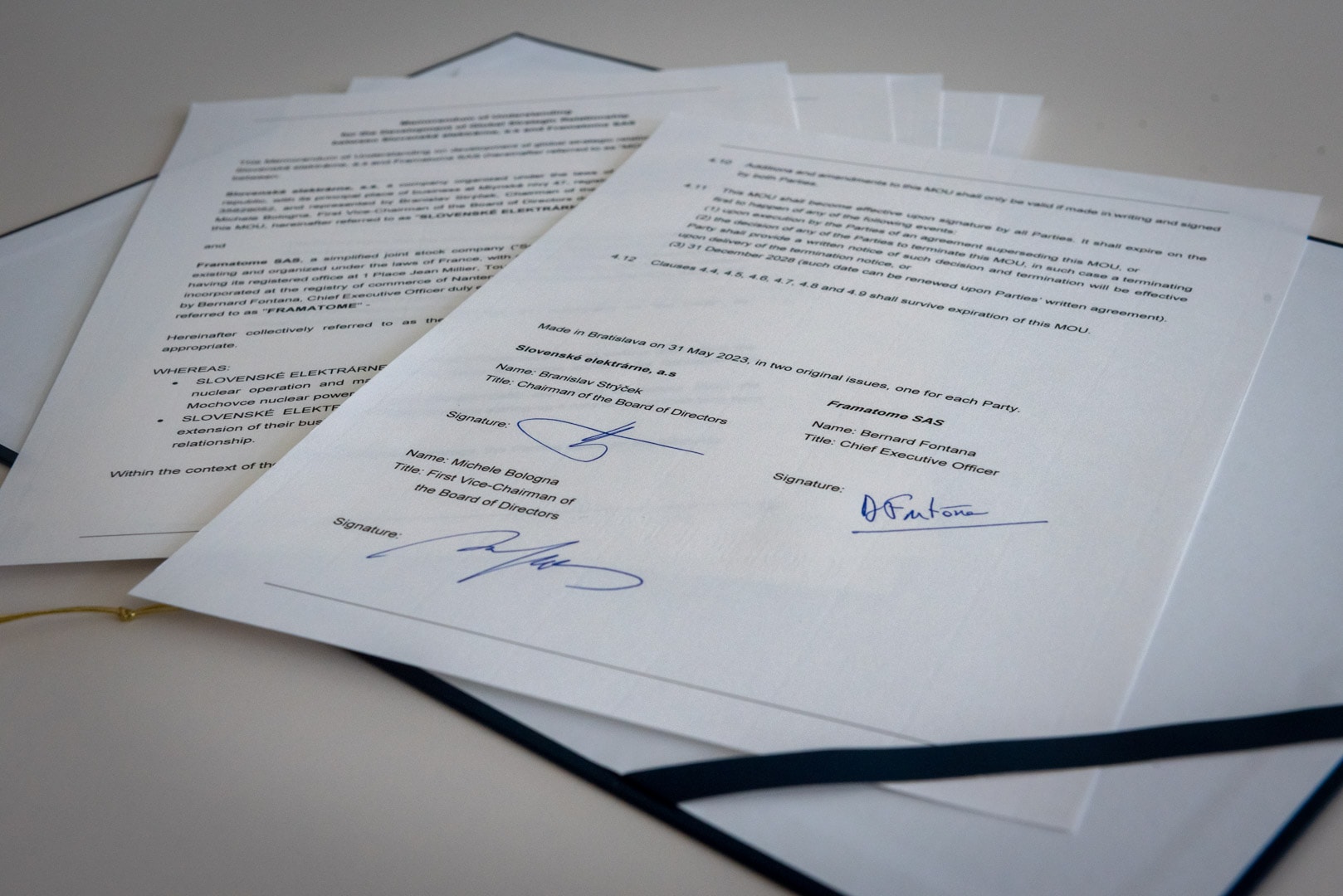
The Memorandum of Understanding and development of strategic relations between Slovenské elektrárne and Framatome creates the basis for further development of long-term relations in the field of nuclear energy – operation and maintenance of nuclear power plants, safety and modernisation, efficiency improvement, instrumentation, digital and cyber security.
In order to ensure the safety and continuity of operation of nuclear power plants with VVER 440 pressurised water reactors, Framatome, in cooperation with Slovenské elektrárne and other European operators, is focusing on the development of a 100% European nuclear fuel design for this type of reactors.
"Nuclear power plants in Slovakia are key pillars of our national energy security. I consider it one of our main tasks to ensure diversification of nuclear fuel supply for the stable operation of Bohunice and Mochovce nuclear power plants. I am very pleased that we have partnered with Framatome on this project in cooperation with other European operators of VVER 440 reactors."
Branislav Strýček
Chairman of the Board of Directors and CEO of Slovenské elektrárne
Framatome is an international company with more than sixty years of tradition. It is involved in the design of nuclear units, production of nuclear fuel, installation and servicing of equipment and components, and instrumentation and control systems. It is a supplier to over 380 nuclear facilities worldwide. Framatome is also represented in Slovakia, with over 100 employees. For the new nuclear units Mochovce 3 and 4, Framatome supplied the instrumentation and control system.
"Framatome is fully engaged in supporting the Slovak Republic nuclear industry and energy policy. This agreement confirms the trust our customer, Slovenské elektrárne, has placed in us over the years. This further demonstrates our will to pursue this strong cooperation that contributes to Slovakia’s national security and diversification of supply for their VVER plant. Our customers count on our robust and reliable expertise, experience and integrated supply chain – especially in the area of nuclear fuel."
Bernard Fontana
CEO of Framatome
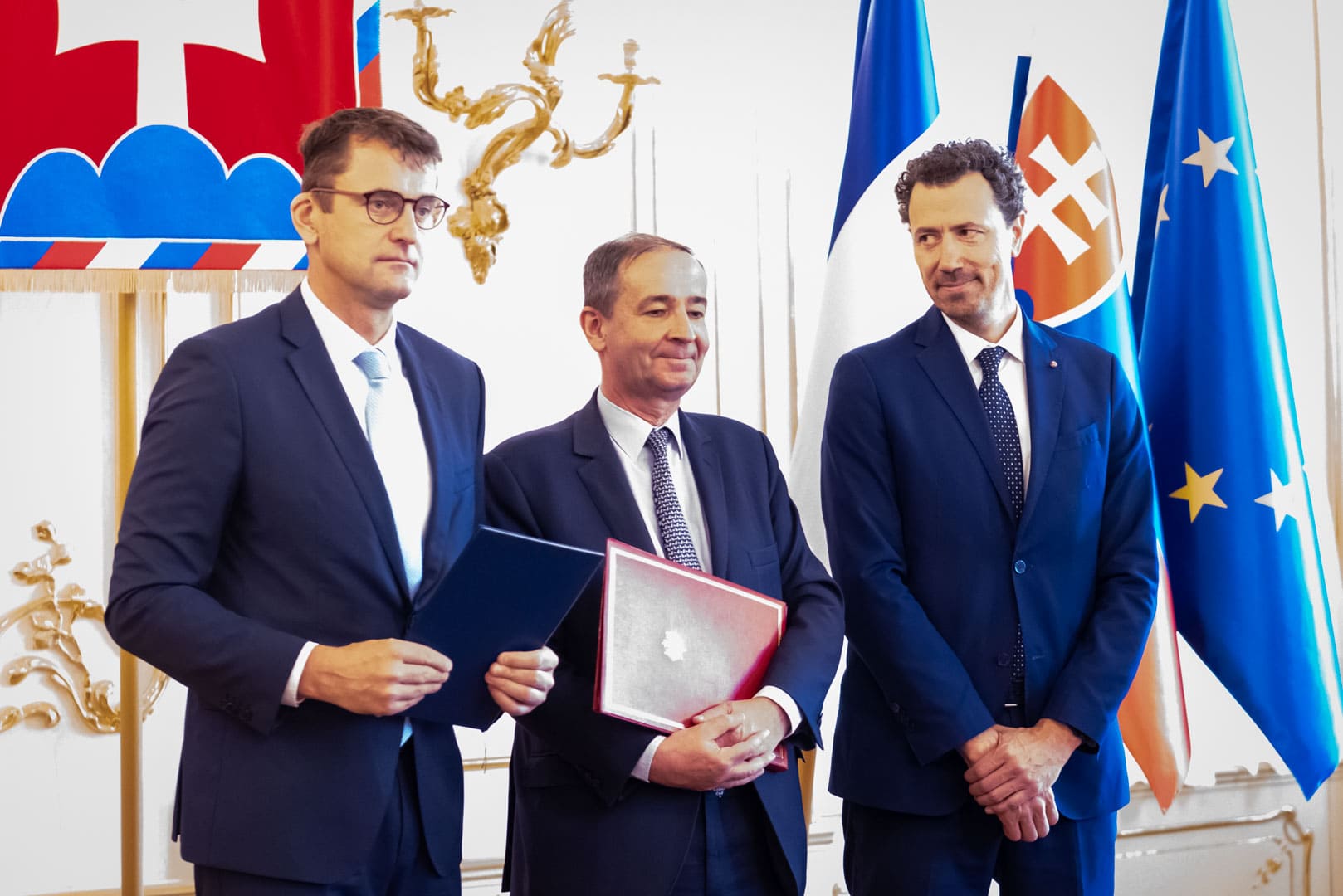
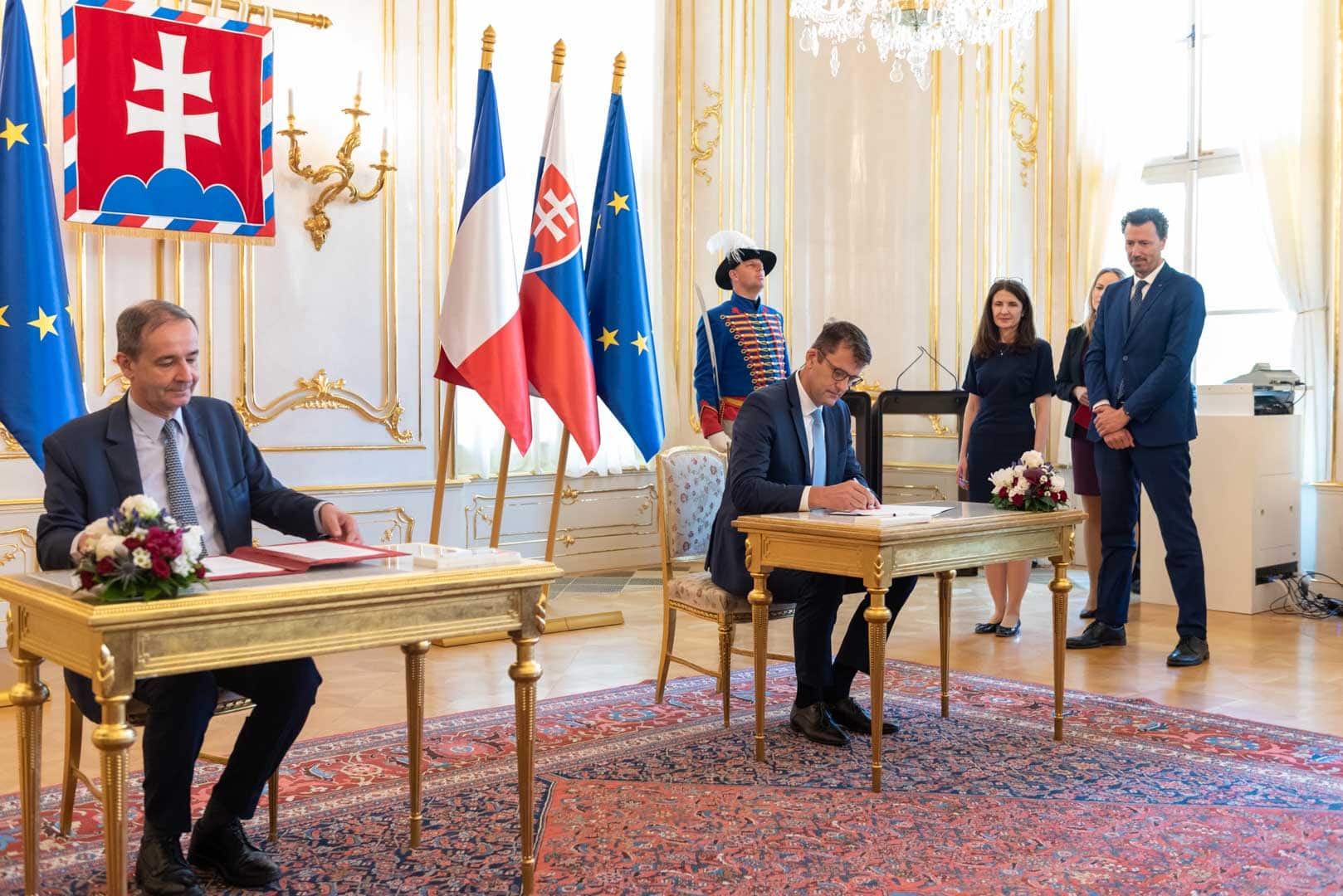
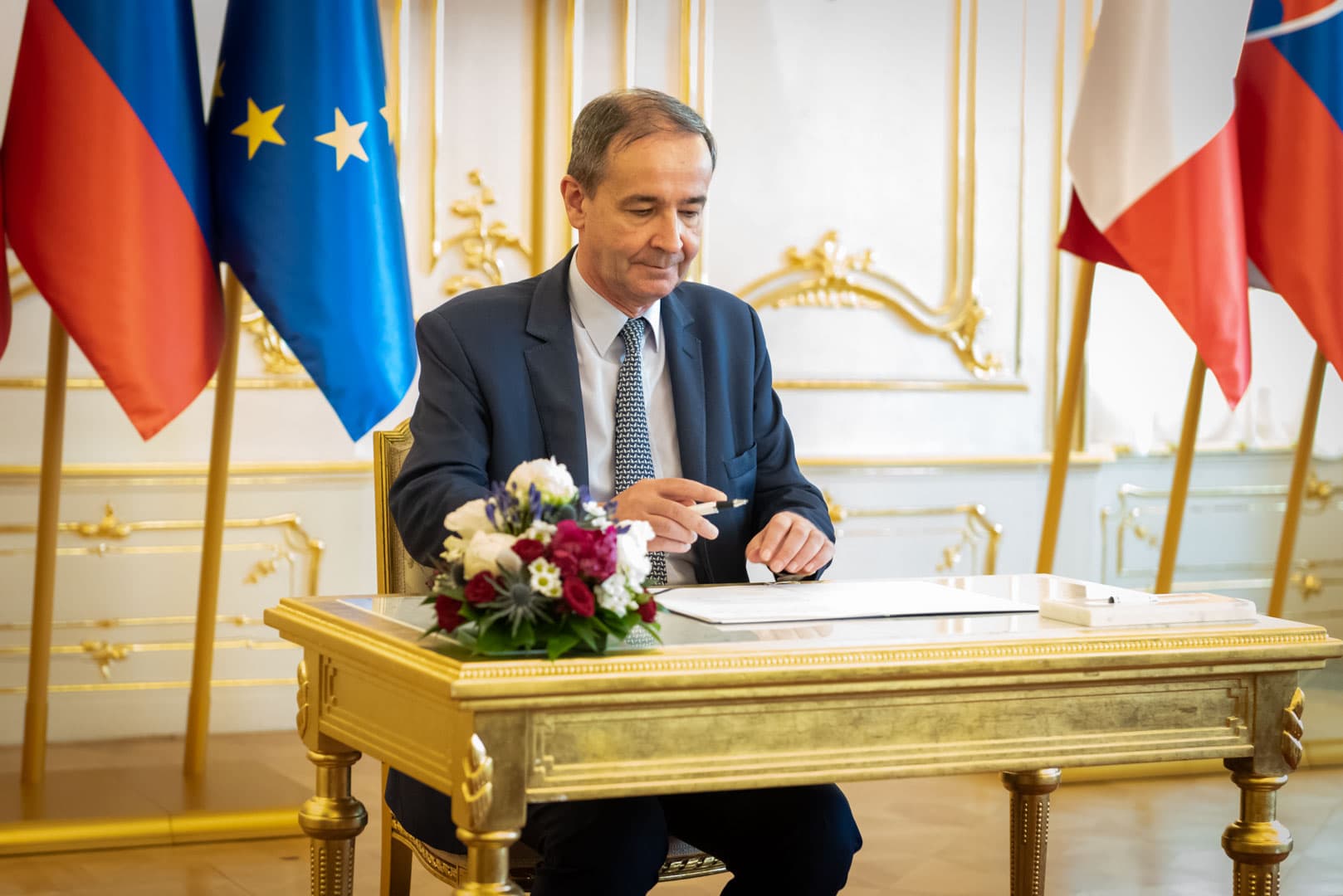
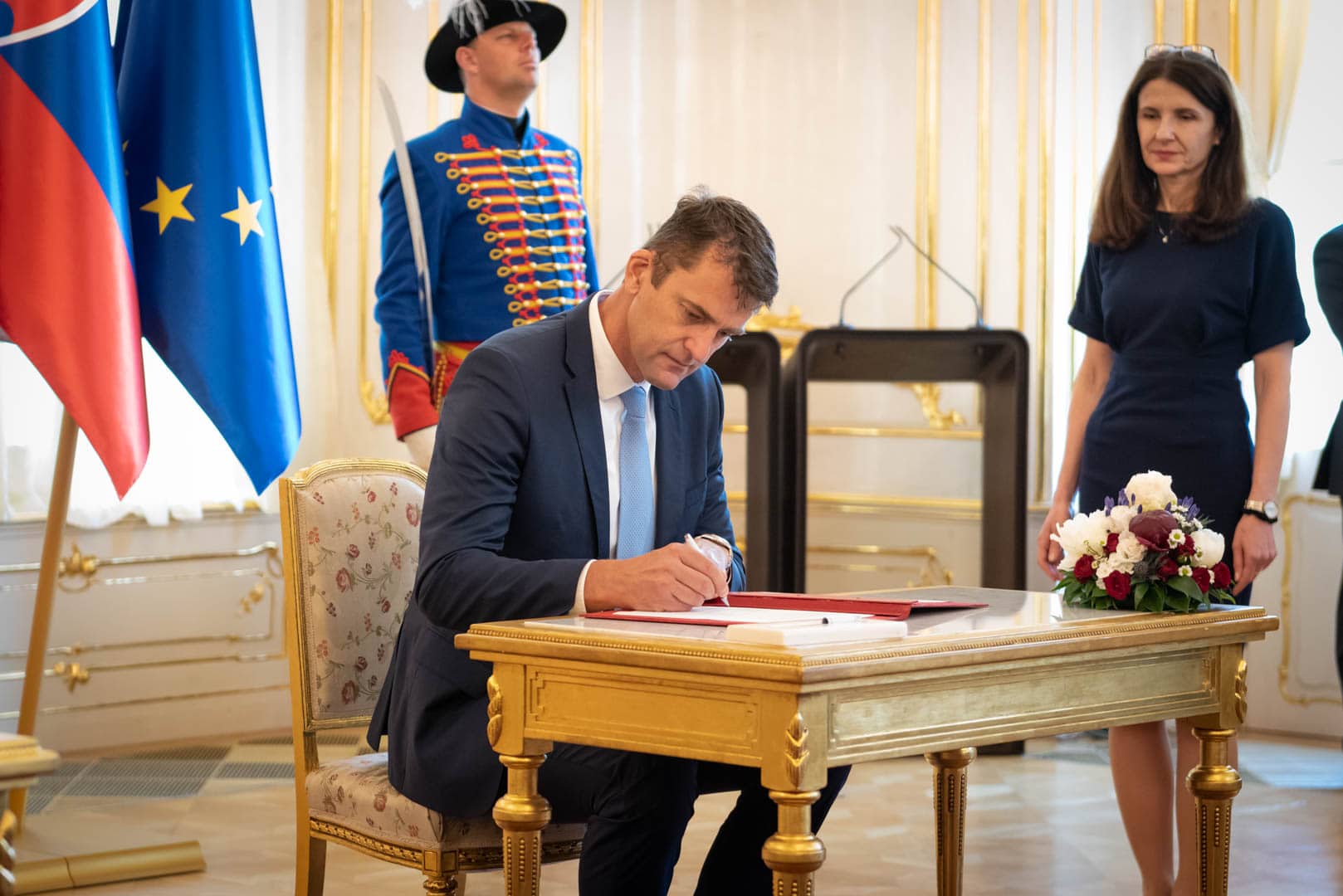
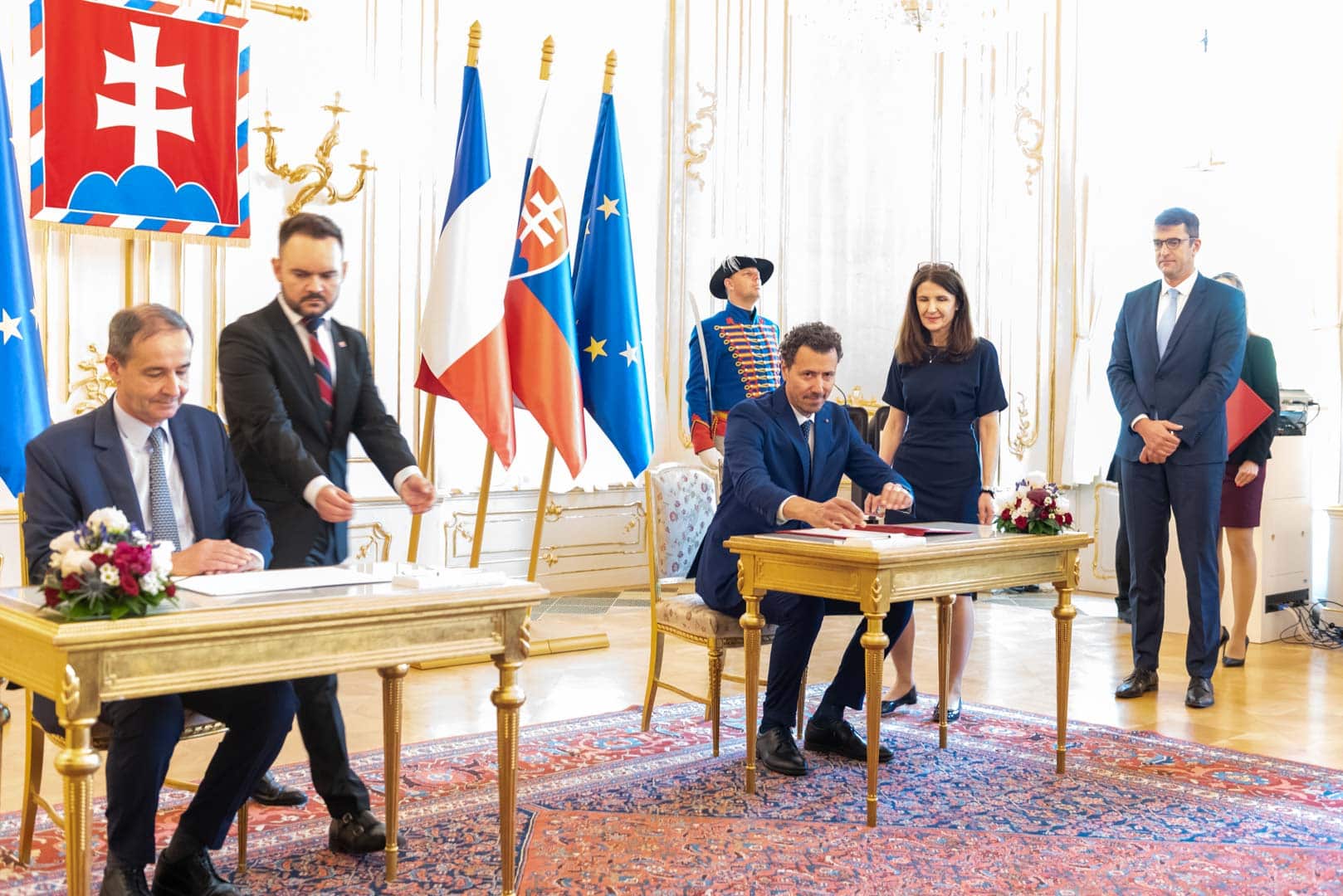
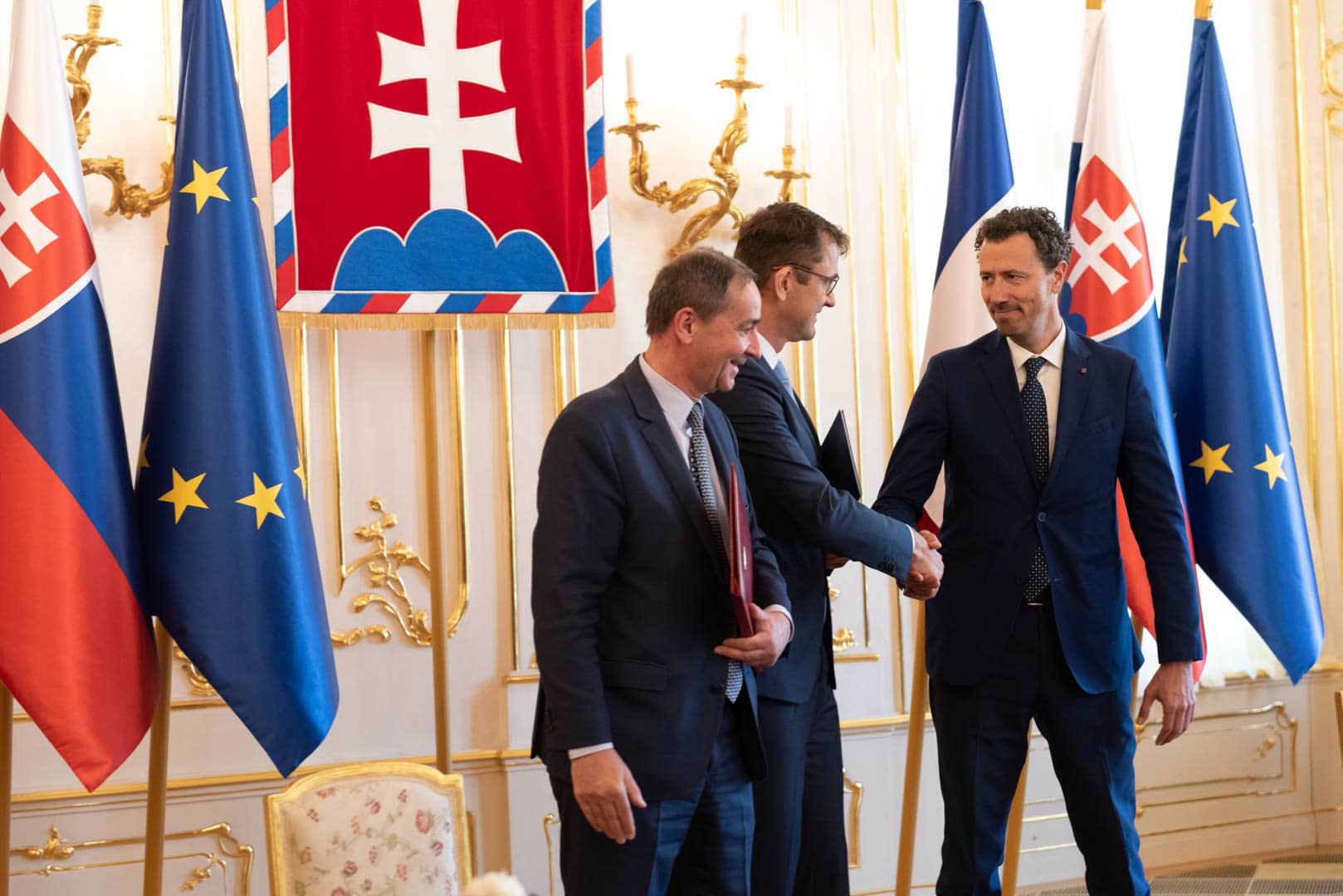
The signing ceremony of the Memorandum of Understanding between Slovak Power Plants and Framatome took place in Bratislava during a meeting between Zuzana Čaputová, President of the Slovak Republic, and Emmanuel Macron, President of France, during his visit to Slovakia.
Slovenské elektrárne, a.s., has increased the power output at the Mochovce 3 nuclear power plant to 55% in the power start-up phase. At the same time, 150 gigawatt hours of electricity have been generated at Mochovce 3 since the first phasing of the turbine generators.
Full operation of Unit 3 and achievement of design parameters will be confirmed by the successful completion of the 144-hour proof run at 100 %, i.e. 471 megawatt capacity. Achieving of this milestone is anticipated in May-June 2023.
Already at its current power, the new unit produces electricity enough to cover the consumption of nearly 750,000 Slovak households.
At the same time, the majority shareholder of Slovenské elektrárne, Slovak Power Holding (SPH), signed an Addendum to the Memorandum on the implementation of extraordinary measures to eliminate the high electricity prices impact with the Ministry of Economy of the Slovak Republic and the Ministry of Finance of the Slovak Republic.
According to the extended Memorandum, Slovenské elektrárne is to supply 5.5 terawatt-hours to households annually:
This is an additional aid to the already agreed volumes of electricity for 2023-2024 in the amount of 6.15 TWh per year, at the price of 61.20 euro/MWh.
"The agreement ensures electricity for households for a long period of time under predictable and extremely favourable conditions. At the same time, the Government has committed that in the period 2023 to 2027 it will not exert any initiative and will not support any initiative against Slovenské elektrárne to introduce, increase or tighten any new tax, levy, fee, specific payment or regulation, thus ensuring a stable regulatory environment for Slovenské elektrárne."
Branislav Strýček, CEO of Slovenské elektrárne
The agreement between the contractual parties will be signed after approval by the European Commission and approval by the statutory bodies of Slovenské elektrárne.
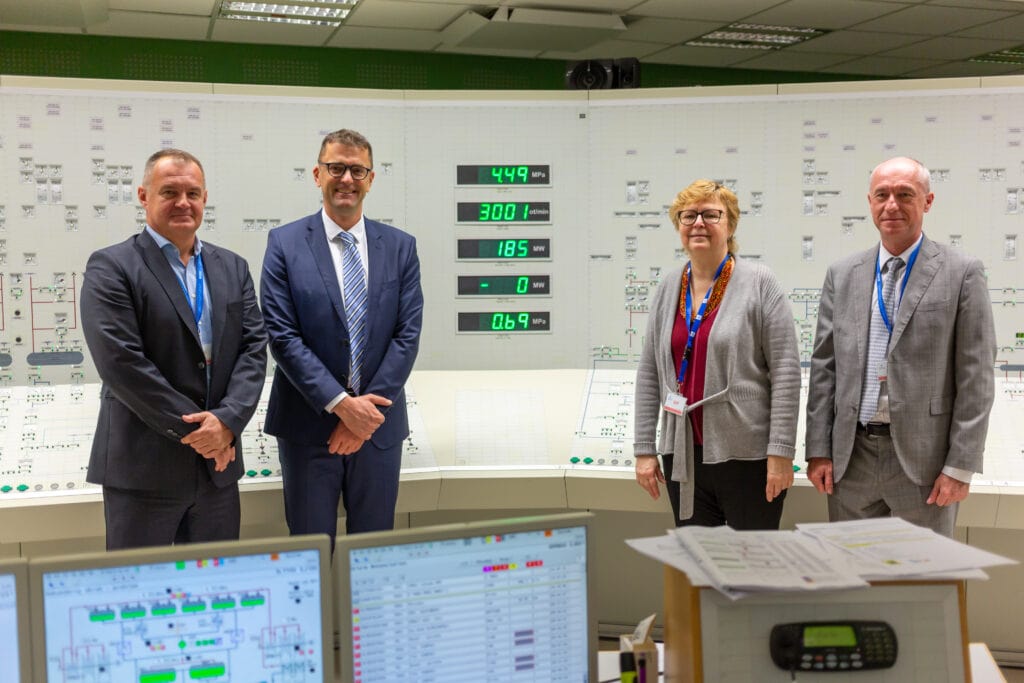
The new Mochovce nuclear unit will have the installed capacity of 471 megawatts at start-up, which will cover approximately 13% of Slovakia's total electricity consumption. In terms of electricity production, Slovakia will thus become energy self-sufficient already this year.
The lifetime of the new nuclear unit is planned to be 60 years at least.
Seven out of ten Slovaks support nuclear energy. Up to 60% think it is safe to generate electricity in a nuclear power plant. This is shown by the results of an ACRC public opinion poll conducted for the Slovak Society for Foreign Policy (SFPA) and Slovenské elektrárne in June-July 2022.
Approximately 70 % of all electricity generated in Slovakia comes from Slovenské elektrárne, a.s. Thanks to nuclear power plants in particular, Slovakia's largest producer supplies up to 95% of its electricity without carbon dioxide emissions, which is considered to be one of the greenhouse gases responsible for global warming. The company is the only one in Slovakia and Eastern Europe to be included in the prestigious Financial Times' Europe's Climate Leader 2022 index for reducing emissions.
In addition to nuclear power plants, the company operates 31 hydro, two thermal and two photovoltaic power plants. Their total capacity is 4143.8 megawatts.
The company has two shareholders. The majority shareholder is the Slovak Power Holding B.V. (SPH) with 66.0000000523 % stake in the share capital. In SPH, EP Slovakia B.V. (a subsidiary of the EPH Group) holds 50 % of the share capital and the remaining 50 % belongs to Enel Produzione S.p.A (a subsidiary of the Enel Group).
The minority shareholder of Slovenské elektrárne, with 33,9999999477 % share in the share capital, is the Slovak Republic, on behalf of which acts the Ministry of Economy of the Slovak Republic.
On Friday, 10 February, Slovenské elektrárne, a.s., completed the power start-up phase at 20% of the reactor's rated power at the Mochovce nuclear power plant Unit 3, and increased it to 35% the same afternoon. At this power level, the unit can now produce steam to drive both of its turbine generators. Over the weekend, therefore, the new unit's electricity production rose to more than 2.6 gigawatt-hours per day and has so far produced a total of 14.5 GWh, equivalent to the annual consumption of 5 800 households.
"The third unit is already in operational configuration with two phased turbines, currently each giving the output of approximately 55 MW. Due to the colder weather, we’ve used only one cooling tower so far, but we will need two when we increase the output further."
– Peter Farkaš, Mochovce NPP Operations Manager
From now on, the Unit 3 should supply electricity to the grid continuously, with small interruptions due to planned tests. Once this commissioning phase is complete, Slovakia's largest electricity producer will increase the output of Mochovce Unit 3 to 55%. The full functionality of the Unit 3 and achievement of design parameters will be confirmed by successful completion of the 144-hour proof run at 100% with 471-megawatt output.
The new nuclear unit in Mochovce will have the installed capacity of 471 megawatts at start-up, which will cover approximately 13% of Slovakia's total electricity consumption. In terms of electricity production, Slovakia will thus become energy self-sufficient already this year.
The lifetime of the new unit is planned to be 60 years at least.
Seven out of ten Slovaks support nuclear energy. Up to 60% think it is safe to generate electricity in a nuclear power plant. This is shown by the results of an ACRC public opinion poll conducted for the Slovak Society for Foreign Policy (SFPA) and Slovenské elektrárne in June-July 2022.
Approximately 70% of all electricity generated in Slovakia comes from Slovenské elektrárne. Thanks to nuclear power plants in particular, Slovakia's largest producer supplies almost 95% of its electricity without emitting carbon dioxide, which is considered to be one of the greenhouse gases responsible for global warming. The company is the only one in Slovakia and Eastern Europe to be included in the prestigious Financial Times' Europe's Climate Leader 2022 index for reducing emissions.
In addition to nuclear power plants, the company operates 31 hydro, two thermal and two photovoltaic power plants. Their total capacity is 4143.8 megawatts.
The company has two shareholders. The majority shareholder is Slovak Power Holding B.V. (SPH) with 66.0000000523 % stake in the share capital. In SPH, EP Slovakia B.V. (a subsidiary of the EPH Group) holds 50 % of the share capital and the remaining 50 % belongs to Enel Produzione S.p.A (a subsidiary of the Enel Group).
The minority shareholder of Slovenske elektrárne, with a 33,9999999477 % share in the share capital, is the Slovak Republic, on behalf of which acts the Ministry of Economy of the Slovak Republic.
On Saturday, 4 February 2023 at 5:35 PM Slovenské elektrárne, a.s., successfully connected to the grid also the second turbine generator of Mochovce 3 nuclear power plant and are continuing with further tests at the power level of 20 %. The first turbine was connected to the grid on Tuesday, 31 January 2023 at 10:57 PM.
"By connecting the turbine generators to the electricity grid of the Slovak Republic, we have for the first time realistically fulfilled the mission of a nuclear power plant – to maintain the fission chain reaction safely and reliably, as well as to supply real electricity to the consumers. Of course, we still have dozens of tests to do before Unit 3 starts producing at 100 %."
– Marek Podolec,
Operation Manager of Mochovce 3 and 4 Nuclear Power Plant
Unit 3 has already supplied two gigawatt-hours of electricity to the grid since it was first synchronised, representing the annual consumption of 800 average households. The process of gradual increase of Unit 3 output and the supply of electricity to the grid helps fulfil the agreement with the Government, in which Slovenské elektrárne committed to supply cheap electricity to households at the price of EUR 61.2077 per megawatt-hour, which represents an unprecedentedly low electricity price for households in the EU.
"The progress of the tests so far in the power start-up phase shows readiness of the technology, start-up personnel as well as operating personnel. Testing is proceeding according to the schedule."
– Juraj Krasňanský
Director of Completion and Commissioning of Mochovce 3 and 4 Nuclear Power Plant
Once all the tests of this stage are evaluated, the unit will transfer to the power level of 35 % of the reactor power and will be gradually increased up to 100%, with short-term planned shutdowns according to the commissioning schedule of the new unit. Full operation of Unit 3 and achievement of project parameters will be confirmed by successful completion of the 144-hour trial run phase at full 471 megawatt power.
The new nuclear unit in Mochovce will have the installed capacity of 471 megawatts at start-up, which will cover approximately 13% of Slovakia's total electricity consumption. In terms of electricity production, Slovakia will thus become energy self-sufficient already in 2023.
The lifetime of the new unit is planned to be 60 years at least.
Seven out of ten Slovaks support nuclear energy. Up to 60% think it is safe to generate electricity in a nuclear power plant. This is shown by the results of an ACRC public opinion poll conducted for the Slovak Society for Foreign Policy (SFPA) and Slovenské elektrárne in June-July 2022.
Approximately 70% of all electricity generated in Slovakia comes from Slovenské elektrárne. Thanks to nuclear power plants in particular, Slovakia's largest producer supplies almost 95% of its electricity without emitting carbon dioxide, which is considered to be one of the greenhouse gases responsible for global warming. The company is the only one in Slovakia and Eastern Europe to be included in the prestigious Financial Times' Europe's Climate Leader 2022 index for reducing emissions.
In addition to nuclear power plants, the company operates 31 hydro, two thermal and two photovoltaic power plants. Their total capacity is 4143.8 megawatts.
The company has two shareholders. The majority shareholder is Slovak Power Holding B.V. (SPH) with 66.0000000523 % stake in the share capital. In SPH, EP Slovakia B.V. (a subsidiary of the EPH Group) holds 50 % of the share capital and the remaining 50 % belongs to Enel Produzione S.p.A (a subsidiary of the Enel Group).
The minority shareholder of Slovenske elektrárne, with a 33,9999999477 % share in the share capital, is the Slovak Republic, on behalf of which acts the Ministry of Economy of the Slovak Republic.
On Tuesday, 31 January 2023 at 10:57 PM, Slovenské elektrárne has connected to the grid the first of the two turbine generators of the Mochovce 3 nuclear power plant. The plant reached this important milestone less than three weeks after the Nuclear Regulatory Authority of the Slovak Republic gave its approval for the beginning of the power start-up on 13 January 2023.
"Today marks a major milestone - for Slovenské elektrárne, the nuclear power community and the entire country. As of today, Unit 3 is already converting the thermal energy released in the reactor into electricity. This will help us fulfil the agreement with the Government, in which Slovenské elektrárne committed to supply cheap electricity to Slovak households at the price of 61.2077 euros per megawatt hour, which represents an unprecedented low price in the EU. Congratulations to my colleagues and thank you to all those who have done their utmost so that we could achieve this important moment today. The new unit will make a significant contribution not only to energy stability, but also to the commitment to reduce greenhouse gas emissions on the road to carbon neutrality."
Branislav Strýček, Chairman of the Board of Directors and CEO of Slovenské elektrárne, a.s.
After the transition to power start-up, tests were conducted successively at the levels of 5, 15 and 20% of the reactor's rated power, with measurements and tests of both nuclear and non-nuclear parts of the plant. The secondary circuit was heated up and steam lines blown down, cold and hot flushes of turbine condensers and low-pressure regenerators as well as feedwater lines were done, and tests of steam generator relief valves were carried out, which were heard in wider vicinity of the plant.
After successful preparation and performance of the tests necessary to start the turbines, steam was brought into the turbines for the first time over the weekend (28 and 29 January), spinning them step-by-step up to their rated speed of 3,000 rpm.
Slovenské elektrárne, a.s. also tested functionality of all electrical protections of the generator itself, the block transformer and finally the 400 kV line connecting the plant to the power system via the Veľký Ďur substation. Electricity will flow along this route to Slovak consumers.
Once this part of the power start-up was completed, Slovenské elektrárne, a.s. could proceed to the actual synchronisation of the first turbine-generator with the grid at 20% of the reactor's nominal power and the Mochovce 3 began to supply the first electricity to the grid.
However, a large part of the second stage of the so-called "energy start-up" is still ahead of Slovenské elektrárne. The unit is still to be tested at various power levels ranging from 35% to 100%.
"In the following weeks, the new unit will supply electricity to the grid with short-term planned shutdowns, according to the new unit commissioning schedule," explained Martin Mráz, Director of Mochovce Nuclear Power Plant.
The full functionality of Unit 3 and the achievement of the design parameters will be confirmed by successful completion of the 144-hour proof run at full power.
The new nuclear unit in Mochovce will have the installed capacity of 471 megawatts at start-up, which will cover approximately 13% of Slovakia's total electricity consumption. In terms of electricity production, Slovakia will thus become energy self-sufficient already in 2023.
The lifetime of the new unit is planned to be 60 years at least.
Seven out of ten Slovaks support nuclear energy. Up to 60% think it is safe to generate electricity in a nuclear power plant. This is shown by the results of an ACRC public opinion poll conducted for the Slovak Society for Foreign Policy (SFPA) and Slovenské elektrárne in June-July 2022.
Approximately 70% of all electricity generated in Slovakia comes from Slovenské elektrárne. Thanks to nuclear power plants in particular, Slovakia's largest producer supplies almost 95% of its electricity without emitting carbon dioxide, which is considered to be one of the greenhouse gases responsible for global warming. The company is the only one in Slovakia and Eastern Europe to be included in the prestigious Financial Times' Europe's Climate Leader 2022 index for reducing emissions.
In addition to nuclear power plants, the company operates 31 hydro, two thermal and two photovoltaic power plants. Their total capacity is 4143.8 megawatts.
The company has two shareholders. The majority shareholder is Slovak Power Holding B.V. (SPH) with 66.0000000523 % stake in the share capital. In SPH, EP Slovakia B.V. (a subsidiary of the EPH Group) holds 50 % of the share capital and the remaining 50 % belongs to Enel Produzione S.p.A (a subsidiary of the Enel Group).
The minority shareholder of Slovenske elektrárne, with a 33,9999999477 % share in the share capital, is the Slovak Republic, on behalf of which acts the Ministry of Economy of the Slovak Republic.
Earlier in January, Slovenské elektrárne successfully completed the first stage of commissioning of the new nuclear unit, so-called physical start-up. It included dozens of prescribed tests - pressure tests of the containment, primary circuit and steam generators had to be carried out, functionality of the reactor control and protection systems had to be verified, and complex tests had to be carried out to verify all the reactor core characteristics - first without the controlled fission reaction, later at the minimum power of 10-7 to 2% of the nominal power.
A report on the physical start-up results was submitted by Slovenské elektrárne to the Nuclear Regulatory Authority of the Slovak Republic, which issued the approval for the next stage of commissioning of the nuclear installation - the energy start-up on 13 January 2023.
In this commissioning stage, the reactor power is increased to 5% in the first step and further tests are carried out with simulation of situations that the plant is unlikely ever to experience in normal operation. The power level will be increased step-by step until 100% of the nominal power is reached. At each power level, a series of scheduled tests, approved by the Nuclear Safety Authority of the Slovak Republic, will be carried out.
Once the reactor power is increased to 20 %, when the steam generators are producing sufficient steam, the first turbine-generator and later the second one will be connected to the Slovak electricity system and first megawatt-hours of low-carbon electricity will start flowing into the grid.
The full functionality of Unit 3 and the achievement of the design parameters will be confirmed by successful completion of the 144-hour proof run at full power.
The new nuclear unit in Mochovce will have the installed capacity of 471 megawatts at start-up, which will cover approximately 13% of Slovakia's total electricity consumption. In terms of electricity production, Slovakia will thus become energy self-sufficient already this year.
The lifetime of the new unit is planned to be 60 years at least.
Seven out of ten Slovaks support nuclear energy. Up to 60% think it is safe to generate electricity in a nuclear power plant. This is shown by the results of an ACRC public opinion poll conducted for the Slovak Society for Foreign Policy (SFPA) and Slovenské elektrárne in June-July 2022.
More than 64.3% of all electricity generated in Slovakia comes from Slovenské elektrárne. Thanks to nuclear power plants in particular, Slovakia's largest producer supplies up to 94% of its electricity without emitting carbon dioxide, which is considered to be one of the greenhouse gases responsible for global warming. The company is the only one in Slovakia and Eastern Europe to be included in the prestigious Financial Times' Europe's Climate Leader 2022 index for reducing emissions.
In addition to nuclear power plants, the company operates 31 hydro, two thermal and two photovoltaic power plants. Their total capacity is 4143.8 megawatts.
The company has two shareholders. The majority shareholder is Slovak Power Holding B.V. (SPH) with 66.0000000523 % stake in the share capital. In SPH, EP Slovakia B.V. (a subsidiary of the EPH Group) holds 50 % of the share capital and the remaining 50 % belongs to Enel Produzione S.p.A (a subsidiary of the Enel Group).
The minority shareholder of Slovenske elektrárne, with a 33,9999999477 % share in the share capital, is the Slovak Republic, on behalf of which acts the Ministry of Economy of the Slovak Republic.
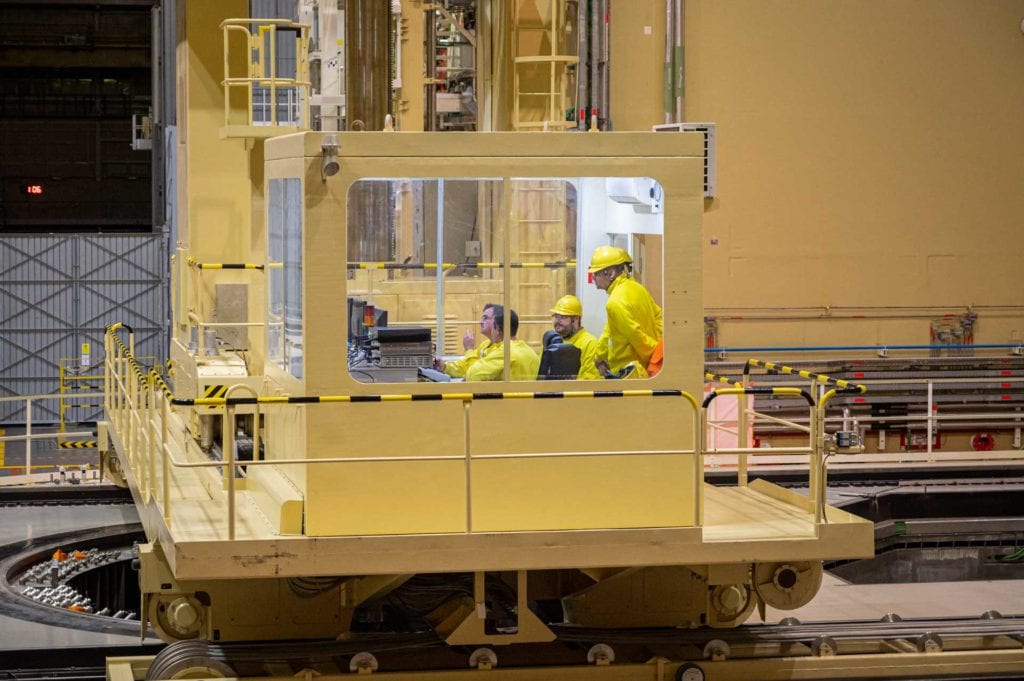
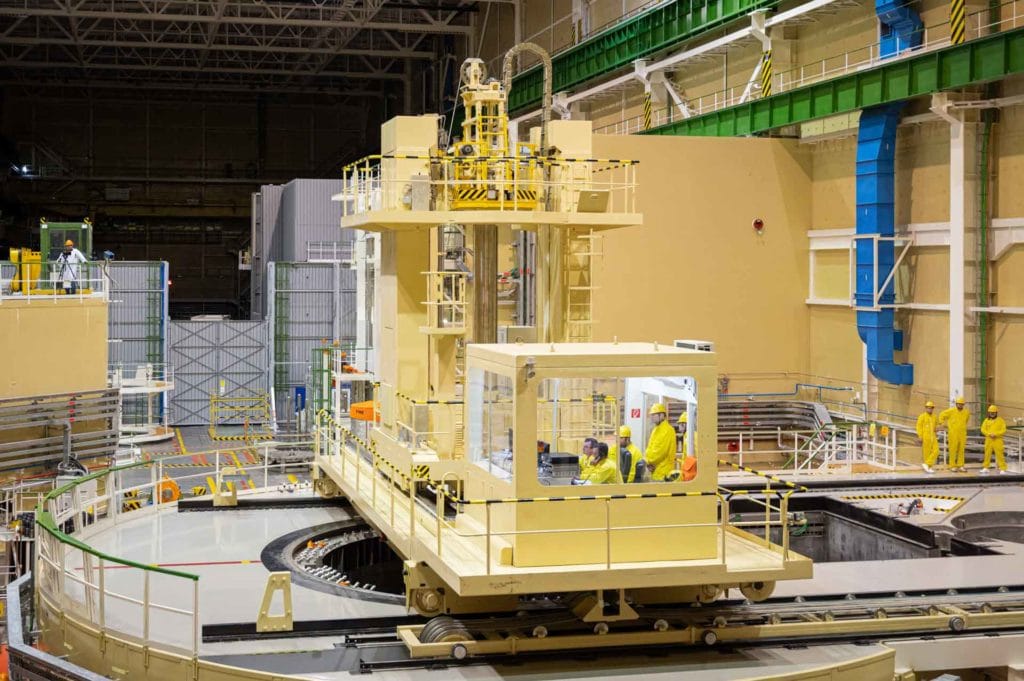
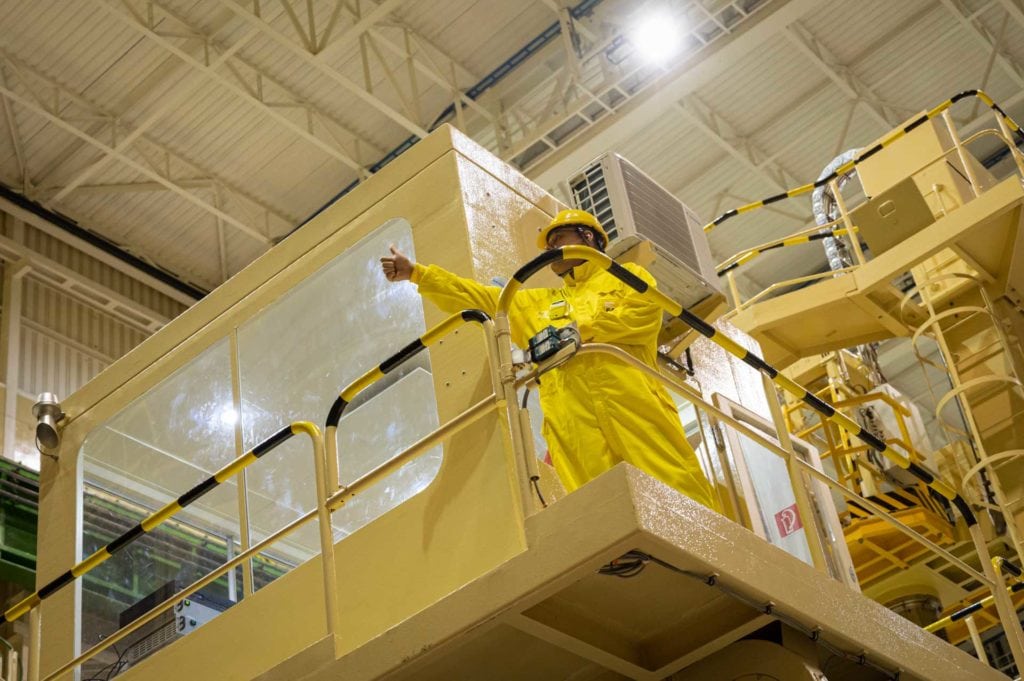
The controlled fission chain reaction is already underway in the reactor, although the reactor power is very close to zero.
"This is a very important milestone in the commissioning of the nuclear reactor. It is the moment when we have vivified the nuclear fuel in the reactor, and we are bringing the reactor to life. It should be at full power in early 2023."
Branislav Strýček, Director General of Slovenské elektrárne
Slovenske elektrarne thus achieved another important milestone in the nuclear installation commissioning:
"Today we are starting the physical start-up tests and bringing the reactor to power. The first reactor start-up includes complex tests, in which all characteristics of the reactor core are verified in real conditions."
Martin Mráz, Mochovce NPP Director
After the tests are completed in the next few days, Mochovce 3 will move from physical to power start-up. This means that heat from the reactor will be sufficient to heat up water and generate steam to spin the turbines. The reactor's output will gradually increase and at 20 % the plant will be synchronised to the Slovak electricity grid for the first time.
In the next phase of commissioning, so-called power start-up, the reactor power is increased step by step and a number of tests are carried out. Various situations will be simulated that the plant will probably never experience in normal operation.
The power level is gradually increased until the reactor finally reaches 100 % power. It is only in this second start-up phase that the first megawatt-hours from the new Mochovce 3 unit, with no carbon dioxide emissions, will get to the Slovak electricity grid.
Commissioning is completed with 144-hour trial run of Mochovce 3 at full capacity. Slovakia will thus become energy self-contained in terms of electricity production in 2023. The new unit’s lifetime is planned to be 60 years at least.